




By Paul McNally
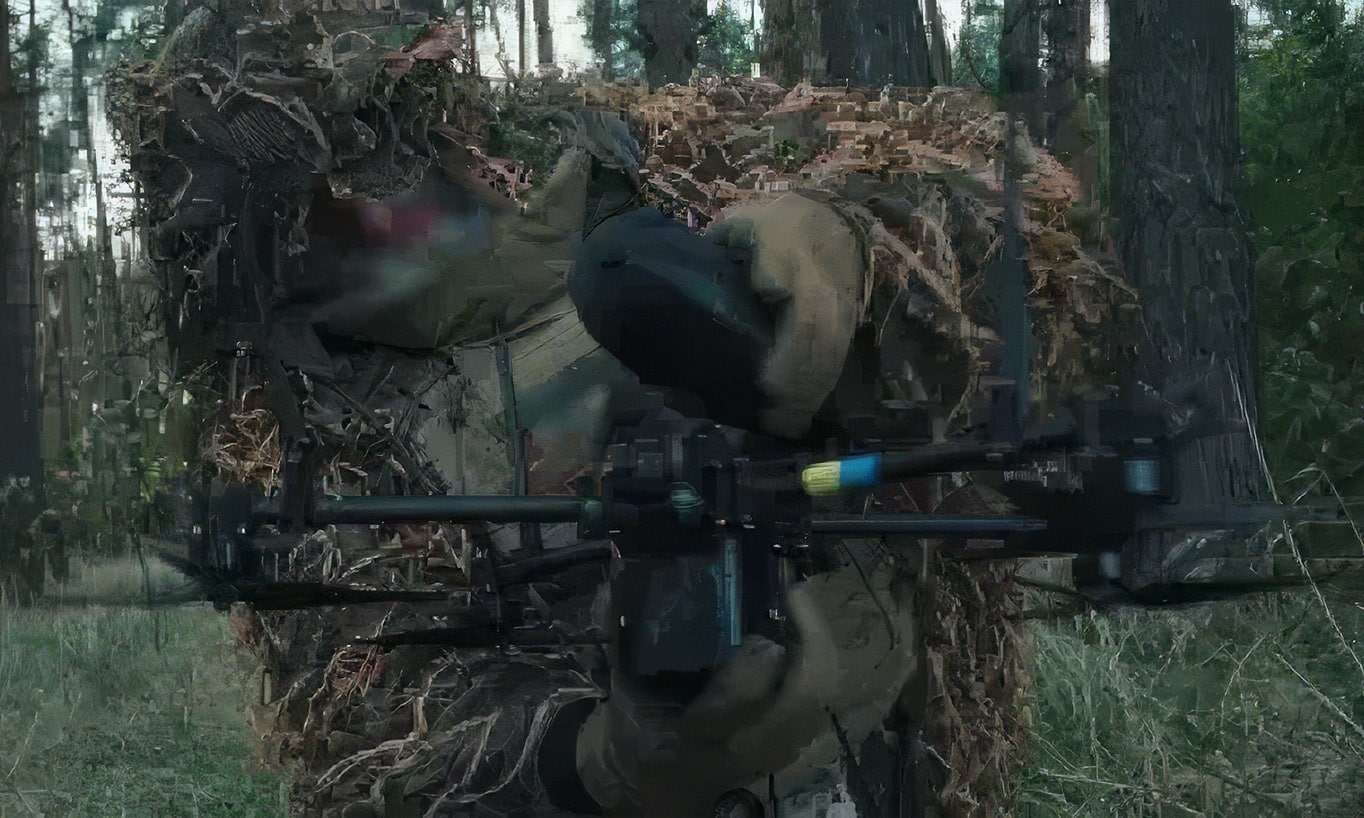
There is no shortage of military games that really want to look real. That’s been true for decades. Guns are modelled down to the screw (at least until you pop a gold camo on them and then anything can happen), ballistics are tuned, reload animations are fussed over, and my favorite marketing departments love nothing more than the word “authentic.” Most of the time, though, the reality being sold is still a version of “war” that has been sanded down into something we can call fun. With microtransactions.
Today, we are looking at something different – Ukrainian Fight Drone Simulator, or UFDS, a project that sits in a much more uncomfortable space.
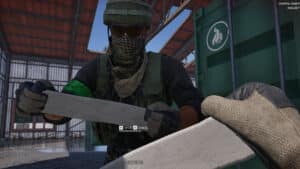
On one level, it is a drone simulator available on Steam, with missions, multiplayer, PvP races, and a civilian-facing Starter Edition that anyone can buy. You, me, Johnny next door. On another, it is a tool built in Ukraine alongside active FPV drone operators; shaped by the people using drones in the ongoing war against Russia, and used to help train Ukrainian combat drone pilots before they ever put their real hardware in the air.
That makes it difficult to talk about in ordinary video game terms, because UFDS is not simply borrowing the visual language of modern war like your Call of Duty’s and your Battlefields, it’s actually taking real war, from a real conflict and saying, “look folks, this is what our guys are having to do right now, while you watch Netflix.”
“For us, UFDS is a simulator for training, first of all,” the development team, Simtech Solutions explains. “On Steam, it is a civilian version of the professional tool that people can buy, play, and learn from. But it comes from a military environment, not from a traditional entertainment-first game.”
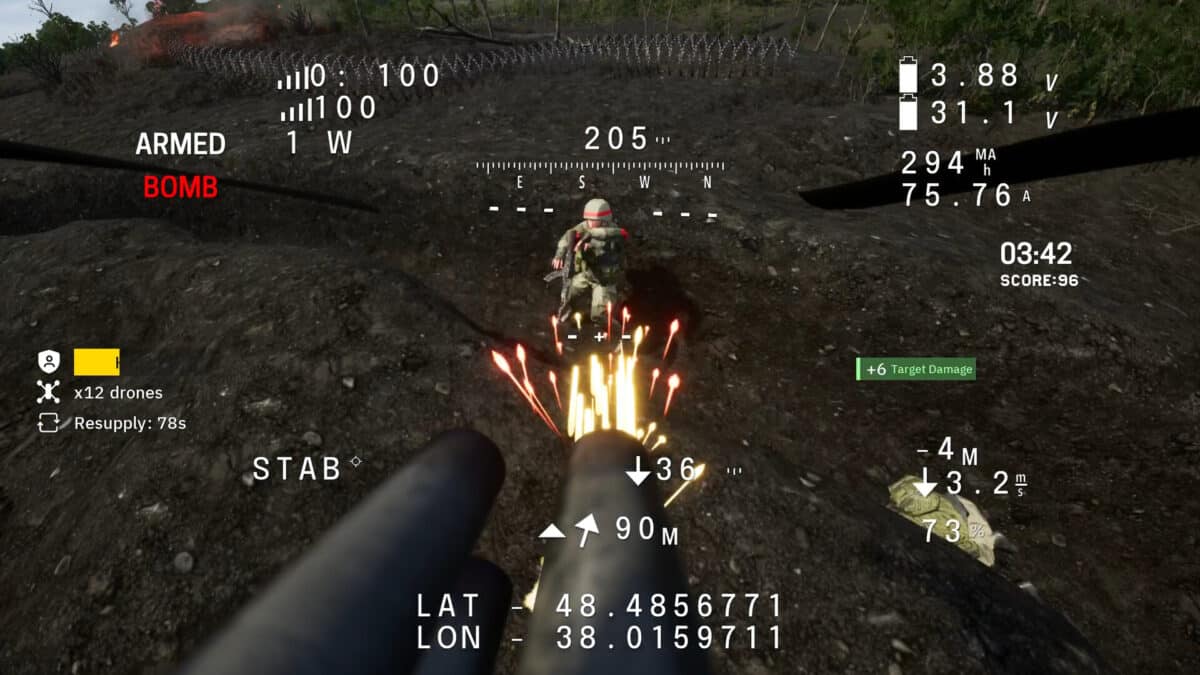
UFDS may appear in the same storefront as conventional military games, drone racers, and flight sims, but the developers are keen to draw a line around its purpose. It is not built around power fantasies or cinematic spectacle. Its basic vocabulary is different: control, precision, decision-making, resource management, and understanding how an FPV drone behaves when you are the one under pressure. Of being shot.
“So yes, it can be played as a game,” the team says, “but we describe it first as a simulator and a training-oriented tool.”
That immediately raises the question at the heart of UFDS: what happens when the mechanics that make something useful for war also make it playable at home?
The team does not pretend there is no tension there. In fact, it is the tension the project has to live with. The Steam version has to make sense to a civilian audience, and not just those who want to blow pretend Russians up, but the developers say the line between realism and gamification is not blurry for them.
“The line is very clear for us: realism should serve learning and understanding, not turn war into entertainment,”.
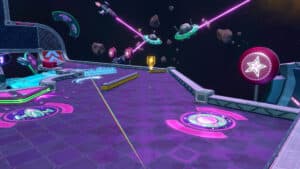
That does not mean UFDS is completely stripped of conventional game-shaped ideas. The latest update adds multiplayer, including five-player co-op missions and PvP racing. The developers acknowledge that a public audience wants things to do beyond pure training scenarios, so racing has been introduced using a special drone called Dzhmil, designed for those missions. It’s a necessary step away from the main thrust. Maybe it feels a little out of place, maybe its a necessary evil.
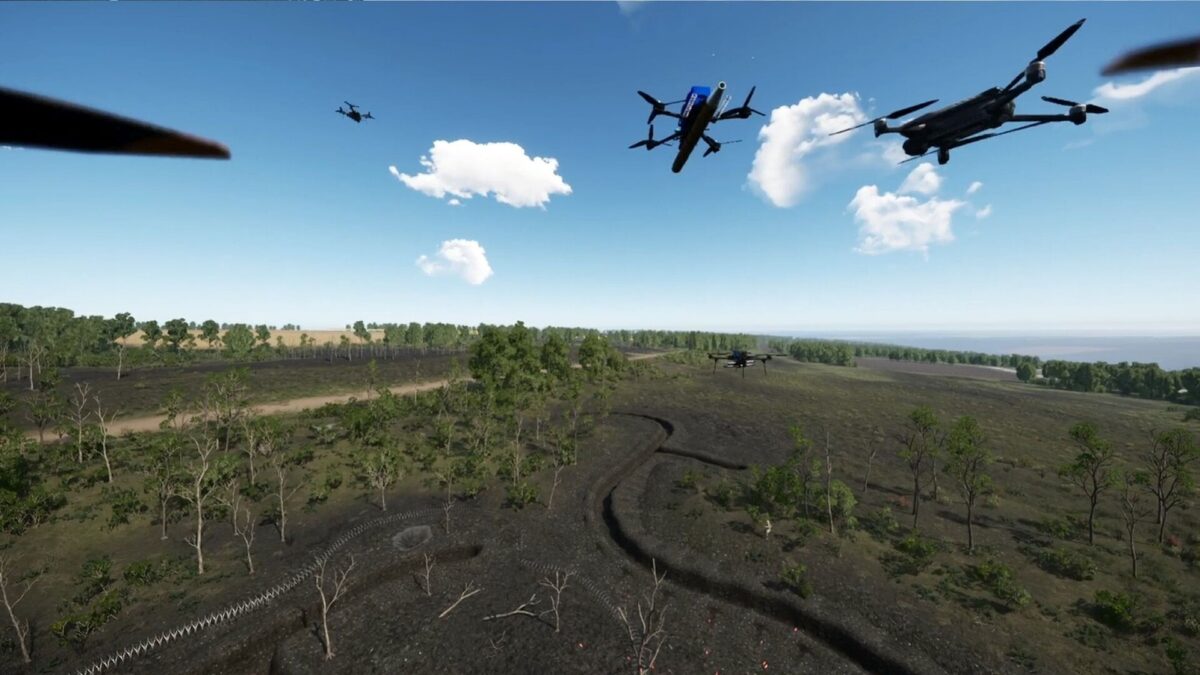
But in the more serious Academy and Battleground modes, UFDS deliberately keeps the awkward, frustrating, unglamorous parts intact. Physics are not really your friend. Communication limits matter to your success rate. Electronic interference is a pain in the ass. Mission discipline is key to everything. These are not there to make the player feel powerful; they are there because, in real FPV operations, they are the only thing.
The simulator’s connection to real operators is not a loose marketing line like we are used to either. According to the UFDS team, the project has been shaped from the beginning by Drone Fight Club Academy and its instructors.
“Their instructors were guiding us from the very first day of UFDS development,” the team says. “Also, our team members love piloting drones – it is a hobby for almost all of us.”
The feedback loop now goes wider than that. The developers collect responses from Ukrainian Army personnel, drone manufacturers they work with, and the Steam community. Some of that feedback is technical, some of it is about mission design, and some of it is about the mistakes beginners repeatedly make.
It directly influences the survival of our nation in the war
UFDS devs
“That feedback covers many levels: flight behaviour, how different payloads affect handling, how wind feels, what beginners struggle with, how missions should be structured, and which details are essential,” they say. “Not always can we make updates very quickly, but all the feedback goes directly to the dev team, where it is prioritised and turned into tasks, which form our daily to-do list.”
That daily list, unusually for a Steam game, is partly being shaped by a live war.
The UFDS team says the foundation of the simulator comes directly from Ukrainian FPV experience, including the needs of trainees and the problems military pilots face while learning. When asked how much of the project comes from real operations, the answer is blunt.
“We’d say it is 80% of what we do, as it directly influences the survival of our nation in the war,” the developers say.
At the same time, they are clear that the Steam edition is not a public mirror of frontline drone operations. It is adapted for the audience, limited in its scope, and deliberately incomplete.
“The Steam version is relatively young and it doesn’t mirror real frontline operations,” they explain. “It is an adapted public version. We keep the principles and the training value, but we remove or simplify anything that should not be public. The civilian player gets an entry-level understanding of the skill set, not access to the full military training environment.”
That is an important caveat, because UFDS exists in a world where the boundaries between civilian tech, military training, game interfaces, and viral war footage are increasingly difficult to separate. A lot of people’s understanding of FPV drone warfare now comes from clipped, edited videos online: a drone diving, a target hit, a short burst of footage, often set to music that makes a complex operation look instantaneous.
The developers say that is one of the biggest misconceptions they encounter.
“People often see only the last seconds: a fast approach, an impact, a dramatic result,” they say. “They do not see the training, failed attempts, crashed drones, planning, navigation, communication problems, battery limits, wind, signal issues, or the overall stress, which is huge on the frontlines.”
Drones have become one of the defining technologies of Russia’s war in Ukraine. What began with reconnaissance drones, improvised commercial quadcopters, and artillery spotting has evolved into a dense battlefield ecosystem of first-person-view attack drones, bomber drones, long-range strike drones, naval drones, surveillance platforms, and counter-drone systems.
FPV drones have been especially important because they are relatively cheap, fast to build, and can threaten infantry, vehicles, artillery, supply routes, and exposed positions. Reuters reported in February 2026 that small FPV drones had come to dominate the skies over Ukrainian battlefields, making movement by armoured vehicles increasingly dangerous.
Their importance is not only tactical. Ukraine has also used mid-range drones to hit Russian logistics, ammunition, fuel, and command infrastructure behind the front line. A Reuters report from May 2026 said these strikes were being used to disrupt Russian supply lines and air defences, although analysts cautioned that drones alone could weaken Russian operations without necessarily deciding the wider war.
The conflict has also become a constant race between drones and countermeasures. Electronic warfare, signal jamming, camouflage, mobile anti-drone units, and new drone designs have all become part of the fight. Reuters reported in July 2026 that Russia was trying to jam Starlink-linked Ukrainian drone operations, while Ukrainian units were prioritising those jamming systems as targets.
The scale of drone production has also changed dramatically. RUSI estimated that Ukrainian drone production rose from roughly 3,000–5,000 drones in 2022 to more than 2.2 million in 2024, with projections reaching 4.5 million in 2025. That shift helps explain why training tools such as Ukrainian Fight Drone Simulator are here: modern drone warfare is not just about hardware, but about building enough skilled operators to use it under pressure.
For civilian players, that is the difficult context around UFDS. It is not simply a game borrowing the imagery of war. It is a simulator emerging from a conflict in which drones are already reshaping tactics, training, logistics, and survival.
UFDS appears to be built partly in opposition to that shortened view of drone warfare. The simulator is not only about flying into a target. Players have to think about distance, battery, payload, visibility, control stability, wind, and changing mission conditions. Even something that looks simple in a clip becomes more complicated when put back into a full operation.
“In bomber-style missions, the job does not end after the payload is released,” the developers say. “The drone has to return, with a different weight, battery level, and sometimes even environmental conditions.”
That kind of detail is where UFDS becomes most interesting as a simulator, and most uncomfortable as a game. Traditional military games tend to reward aggression, pace, and clean outcomes. Real drone operation, as described by the UFDS team, is much less tidy. It is about preparation, patience, repetition, and the ability to complete a task under imperfect conditions.
“We try to make the player respect the process,” the team says. “In UFDS, the challenge is not just ‘fly fast and hit something.”
That philosophy also explains why the new update focuses so heavily on multiplayer. In another game, adding more drones, more vehicles, or more maps might be the obvious way to expand. UFDS has gone for co-op missions built around teams of up to five players because, according to the developers, that better reflects how real operations work.
“Real FPV operations are not only about one trained pilot with solid skills,” they say. “The success of every FPV mission depends on coordination. A single pilot’s control matters, but so does communication, timing, shared awareness, and the ability to act as part of a group.”
For the developers, multiplayer is not just a content update. It is a change in the training logic. Racing may be there for civilian players, but co-op is there because teamwork is part of the reality UFDS is trying to represent.
“Adding more drones or maps expands content,” they say. “Multiplayer expands the training logic. With co-op missions, players can practise joint action, not just individual flying. That is much closer to the reality we are trying to represent: success depends not only on how well one person flies, but on how well the team works together.”
The military version, the team says, keeps that distinction especially clear. When Ukrainian brigades ask for specific training scenarios, UFDS can be used to recreate virtual environments based on real places. In those cases, the developers say they do not mix training with entertainment.
“Yes, active pilots do push back against things that feel too game-like, and that feedback is extremely valuable,” the team says. “We have always focused on disciplined mission design, especially when it comes to custom missions for brigades that ask us to create something specific. The team follows the needs of the drone pilots and recreates virtual environments of real places. We don’t mix training with gaming in the military version.”
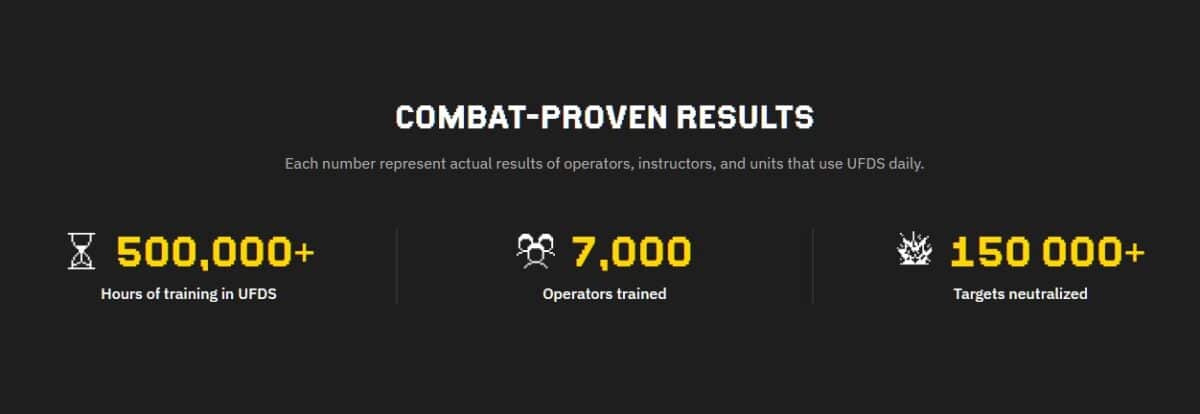
One of the most persuasive arguments for simulation in this space is also the simplest: it allows failure without loss. The first hours of FPV training are not glamorous. They are about muscle memory, micro-corrections, and crashing into stuff. This is best done without destroying actual equipment or endangering anyone.
“A simulator can teach the foundation: muscle memory, orientation, and the discipline of completing a mission rather than simply flying around,” the developers say. “It also allows people to fail safely. A beginner can crash dozens of times in a simulator without losing real equipment or putting anyone at risk.”
That makes UFDS part of a much bigger shift. Games and military training have influenced one another for years, but drone warfare collapses that distance even further. FPV drones are piloted through screens. They rely on controllers, cameras, latency management, hand-eye coordination, and the kind of interface literacy that games have been teaching people for decades. You can read a little more on that in an article I did last year. At the same time, real drone operations are now creating new demands that simulation can respond to quickly.
“Yes, we are already at that point,” the developers say, when asked whether games and military training are now feeding each other in real time. “For years, games borrowed ideas from military technology. Now the exchange is faster and more direct. Real drone operations face new problems, and simulation becomes one of the fastest ways to train and communicate those issues. Drones are new tanks, as we say.”
That last line is pretty chilling, because it is probably true. Tanks reshaped the battlefield in the 20th century and became a fixture of war games, strategy games, shooters, and military fantasy. Drones are now doing something similar in real time, while the war that proves their importance is still happening. In reality, drones are probaby the biggest risk to tanks there has ever been. A new Apex predator.
The difference is that UFDS is not a later cultural response to a historical battlefield. It is being made during the conflict it reflects.
That is why the ethical question cannot be pushed aside. The same qualities that make UFDS useful as a training tool; its realistic physics, mission logic, payload effects, communication constraints, teamwork, failure are also what make it compelling to play. The developers know that bringing even a limited version to Steam changes the perception.
“We do not ignore that,” they say. “UFDS exists because Ukraine has had to adapt under real wartime pressure, and training drone operators safely became a real need. But when you bring even a limited version to a public platform, you have to be responsible about how it is framed.”
The team says it does not want civilian players to come away thinking war is simply fun. It wants them to understand the difficulty of unmanned systems, the amount of training involved, and how much modern warfare has changed.
“You cannot just grab a controller and fly a drone,” the developers say. “It is not easy. The mechanics may be compelling, but the framing should stay serious.”
There is still a risk, and the developers acknowledge it. Any time a real and brutal part of an ongoing war becomes available through a consumer platform, there is the possibility that it gets consumed like everything else: another Steam page, another update, another multiplayer mode, another clip.
But the UFDS team argues that public understanding is also part of the point. If most people only see drones through viral footage, then a simulator can at least show the effort and failure behind those few seconds.
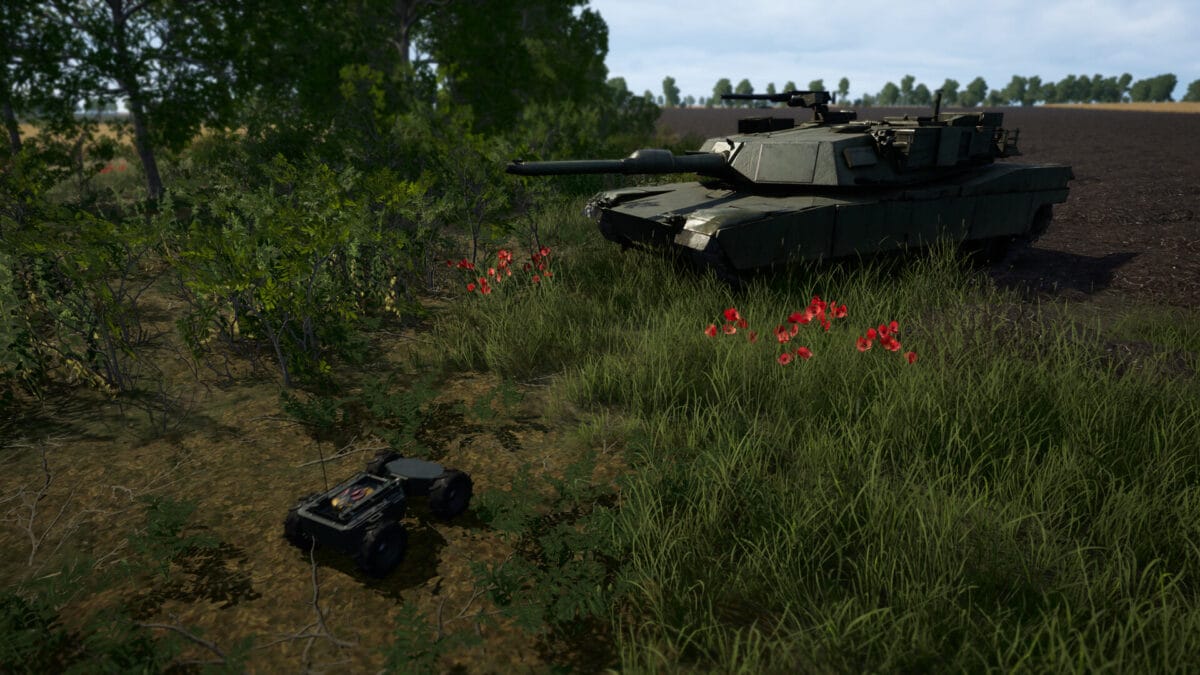
“There is a risk, and we take it seriously, as public understanding is important,” the team says. “Many people see drones only through viral videos. A simulator can show that behind every short clip there is a complex skill set and repeated failure before competence.”
That may be the most honest way to understand UFDS. It is not a normal war game, although it can be played. It is not the full military tool, although it is descended from one. It is not entertainment-first, although it exists in an entertainment marketplace. It is a strange, uneasy product of a war in which cheap drones, fast iteration, and digital training have become survival tools.
The developers say they would rather a civilian player leave UFDS feeling “challenged, informed, and maybe a little unsettled,” and that seems like the right response. Because this is not science fiction, and it is not the kind of battlefield abstraction games have spent years making familiar. It is a technology already shaping real war, now being translated back into something players can download, test, misunderstand, and perhaps understand a little better.
“It would be perfect if enthusiasts and beginners who use UFDS feel respect for those who defend our homeland,” the team says, “as they can see how it is done today.”
The bridge between games and war has always existed. UFDS makes it much harder to pretend it’s somewhere far away.
Paul McNally has been around consoles and computers since his parents bought him a Mattel Intellivision in 1980. He has been a prominent games journalist since the 1990s, spending over a decade as editor of popular print-based video games and computer magazines, including a market-leading PlayStation title. Paul has written high-end gaming content for GamePro, Official Australian PlayStation Magazine, PlayStation Pro, Amiga Action, Mega Action, ST Action, GQ, Loaded, and the The Mirror. He has also hosted panels at retro-gaming conventions and can regularly be found guesting on gaming podcasts and Twitch shows. Believing that the reader deserves actually to enjoy what they are reading is a big part of Paul’s ethos when it comes to gaming journalism, elevating the sites he works on above the norm.