Paul McNally has been around consoles and computers since his parents bought him a Mattel Intellivision in 1980. He has been a prominent games journalist since the 1990s, spending over a decade as editor of popular print-based video games and computer magazines, including a market-leading PlayStation title. Paul has written high-end gaming content for GamePro, Official Australian PlayStation Magazine, PlayStation Pro, Amiga Action, Mega Action, ST Action, GQ, Loaded, and the The Mirror. He has also hosted panels at retro-gaming conventions and can regularly be found guesting on gaming podcasts and Twitch shows. Believing that the reader deserves actually to enjoy what they are reading is a big part of Paul’s ethos when it comes to gaming journalism, elevating the sites he works on above the norm.
Best SpiritVale builds – classes, skills and playstyles explained

By Paul McNally

SpiritVale is out in Early Access today and it is off to a flyer on Steam, so if you are looking for a hand up to get started we got you. The game gives players seven starting classes, several advanced specialisations and hundreds of pieces of equipment to combine. That freedom is one of the MMO’s biggest strengths, but it also makes choosing a build slightly daunting when you first arrive in Nevaris. And we don’t like daunting.
The game entered Steam Early Access today (July 15, 2026), so class balance, individual skills and equipment values are likely to change as development continues. Rather than declaring one build permanently better than everything else, this guide covers the strongest directions for each class and the skills that support them. Just do us a favor and keep inn mind that things could change as the days annd weeks roll on by.
How builds work in SpiritVale
A SpiritVale build is shaped by far more than your chosen class. Weapons, armour substats, cards, Artifact sets and elemental match-ups all affect how well your character performs.
SpiritVale currently includes more than 430 equipment types, over 220 cards and 33 Artifact sets. As a result, two players using the same class may end up with completely different damage rotations, defensive strengths or party roles.
The current class progression paths are:
| Starting class | Advanced class | Main role |
|---|---|---|
| Knight | Paladin | Tanking and enemy control |
| Warrior | Berserker | Melee physical damage |
| Mage | Wizard | Elemental and area damage |
| Summoner | Necromancer | Minions, debuffs and magic |
| Rogue | Shinobi | Mobility, poison and burst damage |
| Scout | Gunslinger | Ranged physical damage |
| Acolyte | Priest | Healing and party support |
| Special class | Weaver | Flexible hybrid builds |
SpiritVale’s own description lists all seven base classes alongside the Paladin, Berserker, Wizard, Necromancer, Shinobi, Gunslinger, Priest and Weaver specialisations.
Best SpiritVale classes for beginners

Knight is arguably the safest choice for a first character. Its higher durability gives you more room to learn enemy attacks, practise dodge timing and survive mistakes while exploring unfamiliar areas. The class later advances into Paladin, which becomes SpiritVale’s main tank and threat-control option.
Scout is another sensible starting point. Fighting at range makes it easier to observe boss patterns without constantly standing in the middle of their attacks. Its Gunslinger advancement can then be developed around rifles, critical hits or Multistrike abilities.
Summoner is well suited to players who prefer a less direct approach. Summoned companions can absorb some of the pressure during ordinary encounters, while the later Necromancer class expands the playstyle with undead minions, Decay effects and corpse-based abilities.
Warrior is more straightforward. It deals strong physical damage, uses wide melee attacks and eventually advances into Berserker. It is less forgiving than Knight, but players who want to hit things with a large axe will immediately understand what it is trying to do.
Best Paladin build
Paladin is the obvious choice for players who want to tank bosses or protect a party. The build should initially concentrate on health, defence, block chance and damage reduction rather than attempting to maximise damage.
Useful skills include:
- Taunt for generating threat and drawing attention away from allies
- Fortify for improving durability
- Defiance for additional damage reduction
- Reflect Shield for reflect-based defensive builds
- Vitality Aura for health-focused setups
- Grand Cross for Holy area damage
- Consecration for a mixture of damage and healing
Once you can comfortably survive incoming attacks, begin adding offensive or reflect bonuses. A tank still needs enough damage and threat generation to stop enemies wandering away and attacking the party’s Wizard or Priest.
Best Berserker build
Berserker turns the Warrior into an aggressive melee damage dealer. Several variations are possible, including critical-hit, attack-speed, skill-damage and Multistrike builds.
Mighty Roar and Furious Shout provide important offensive buffs, while Blood Howl grants HP siphon that can help keep the Berserker alive during prolonged fights. Cyclone is useful when clearing groups, with Execute providing more concentrated damage against individual targets.
Blood Frenzy supports faster attacks and Multistrike builds, while Wild Charge gives the class some much-needed mobility.
Avoid investing in every offensive mechanic simultaneously. Choose one clear direction based on the equipment you find, and make sure you retain enough accuracy to hit enemies consistently.
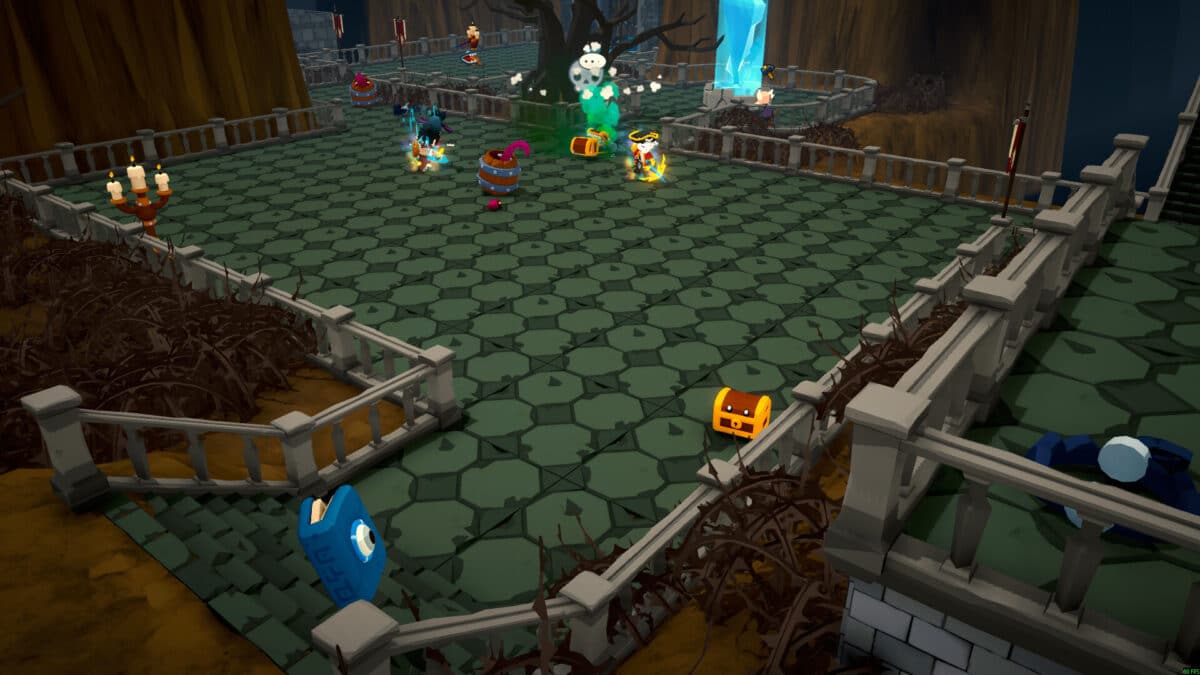
Best Wizard build
Wizard specialises in ranged elemental damage and large area attacks. It is particularly effective when farming tightly packed groups, although mana management and positioning remain important.
Thunderstorm, Firewall and Fire Pillar provide several ways to damage groups, while Hydro introduces Water damage into the rotation. Elemental Overload and Arcane Sigil can further increase magical output.
Free Cast is valuable for maintaining movement while fighting, and Elemental Exposure helps increase the magical pressure placed on enemies.
There is no single element that will dominate every part of SpiritVale. Enemy resistances and elemental properties vary between biomes, so a good Wizard should be prepared to adjust spells or equipment instead of relying entirely on one damage type.
Best Gunslinger build
Gunslinger is built around ranged physical damage, careful positioning and weapon choice. It can be developed as a long-range rifle specialist, a Multistrike character or a more complicated build that switches weapons during combat.
Strafing Volley and Fan Fire work well in Multistrike setups. Sniper Shot provides long-range damage with multiple charges, while Piercing Shot can pass through enemies and apply Vulnerability.
Suppressive Shot applies Marked, Slow Trap provides crowd control and Aerial Shot offers mobility with a brief period of protection.
Gunslinger players should commit to one central mechanic. Trying to support rifle damage, Multistrike, traps and weapon switching with the same equipment will usually produce a weaker character.
Best Priest build
Priest remains the most direct support class in SpiritVale. It provides healing, buffs, cleansing and protection, making it particularly valuable in boss parties.
Heal and High Heal handle regular recovery, while Cure removes negative effects. Haste improves movement and Agility, Benediction provides offensive attributes and Hit, and Sacrament grants Focus to support faster casting.
Guardian Spirit can protect a target from ranged damage, while Divinity supplies additional Vitality.
A support Priest should prioritise healing reliability, mana recovery, cast speed, survivability and positioning. Personal damage can be added later, but it should not come at the expense of keeping the party alive.
Best Necromancer build
Necromancer expands the Summoner class with undead companions, Decay effects and persistent area damage.
Bone Spear provides repeatable direct damage and can apply Decay. Bone Spikes and Death Nova create damaging areas, while Corpse Explosion turns defeated enemies into a source of burst damage.
Death Coil damages enemies while restoring the health of summons. Summon Command and Summon Recall also give the player greater control over minion positioning, which becomes increasingly important during boss encounters.
Necromancer builds should decide whether their main damage will come from summons, direct spells, persistent ground effects or a combination of two closely connected mechanics.
Best Shinobi build
Shinobi is a fast and mobile class that mixes poison, clones, elemental attacks and short skill combinations. It is potentially powerful, but generally requires more attention than straightforward Knight or Warrior builds.
Venom Strike and Venom Coating support poison-focused characters, while Flash Step provides both movement and damage. Fan of Knives helps against groups, and Binding Spiral provides additional control.
Black Blade offers focused melee damage, Flame Orb adds elemental pressure and Smoke Screen can apply Cloak to nearby allies.
Individual tooltip numbers do not tell the whole story with Shinobi. The class depends on maintaining poison, moving between targets and linking abilities together efficiently.
Best Weaver build
Weaver is SpiritVale’s experimental hybrid option. It can combine techniques normally associated with ranged attackers, spellcasters, healers and support characters.
Possible directions include a ranged Weaver using Strafing Volley and traps, a caster built around Free Cast, or a utility character combining Heal, Cure, Haste and crowd-control skills.
Equipment and cards can also support autocast builds that trigger additional abilities automatically.
The key is to build around one interaction. Weaver offers plenty of freedom, but selecting unrelated abilities simply because they look useful will usually leave the character weaker than a more focused class.
Common SpiritVale build mistakes
One of the biggest mistakes is copying a build created during an older playtest. SpiritVale has undergone changes to class balance, armour, sustain, status effects and skill scaling, and Early Access will almost certainly bring further adjustments.
Players should also avoid chasing damage while ignoring accuracy, mana and survivability. A large theoretical damage number is useless when attacks miss, your mana bar is empty or the character dies halfway through its rotation.
Remember that one setup may not work equally well in every biome. Enemies have different defences, elemental properties and resistances, meaning equipment that destroys one group may struggle against another.
How to reset your SpiritVale build
Stat and skill choices can be reset by visiting the Waybinder NPC near the Waypoint in Nevaris. This allows you to experiment with another build without abandoning the character completely.
Take a screenshot of your existing stats, skills and equipment before making changes. You can then compare damage, recovery and clear speed to determine whether the new build is genuinely better or simply looks more impressive on the character screen.










Categories


Latest News

Cygnus Cross, the game studio run by CohhCarnage and company, has announced its debut game Emberville's Early Access release date. The game is now set to release on October 27th,…