



By Ollie Ring
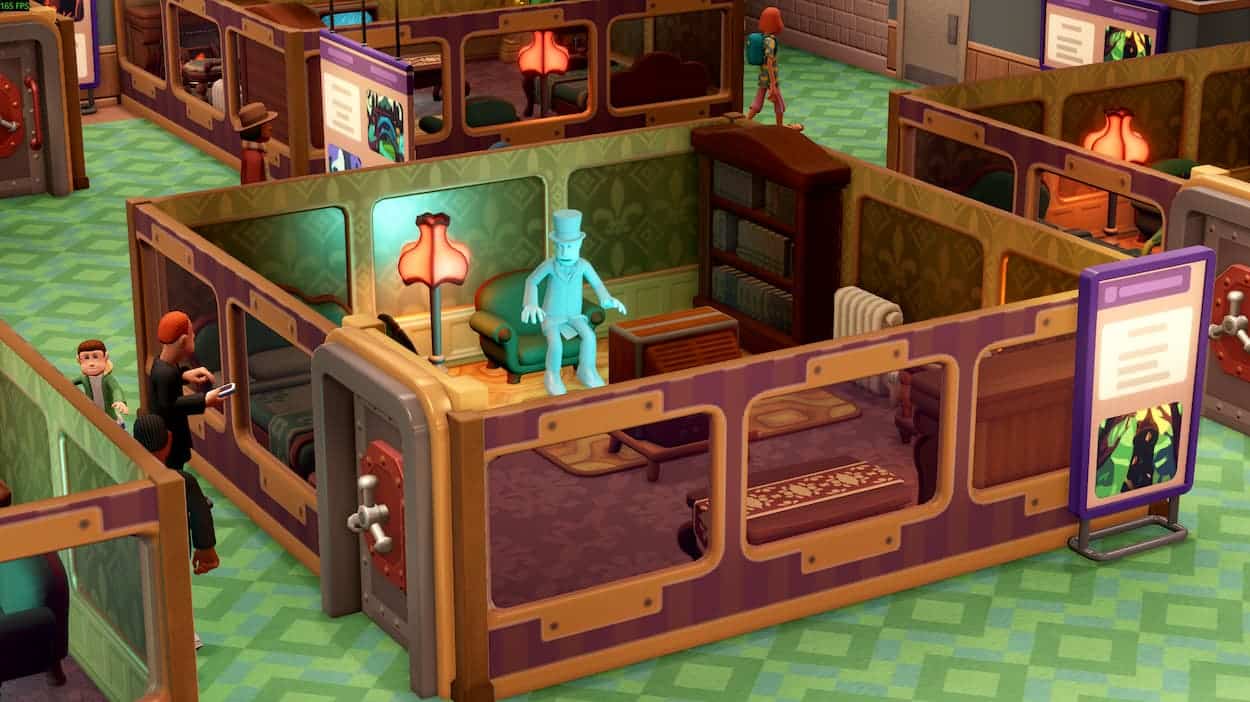
If you spend 20 minutes perusing the world of gaming social media, you’ll find a community more often than not incandescent with rage. Clip culture, rage-bait headlines, and people brandishing the word “slop” as if it’s the only adjective left in the English language. UK-based company, Two Point Studios, has spent the better part of a decade building precisely the opposite. Their hospitals, campuses, and now museums are deliberately engineered to make people feel good.
“We like to make people happy, and we’re a happy team,” beamed Gary Carr, Co-Founder and Creative Director of Two Point, when we perched for a chat before things got too busy at Ukie’s For One Night Only showcase event (which broadcasts later tonight). But the art of making people happy is not to be underestimated, and Carr recognises the fine line between instilling humour into games, and creating titles that people want to play, “if we’re trying too hard to be funny, it’s usually not funny.”
For COO Jo Koehler, her shift towards feel-good games that feel constructive more than destructive came with parenthood. She tells me, “When you have kids, it’s weird – you suddenly have this extra conscience about what you’re producing, and you want it to add something.” Perhaps that’s a sprinkle of business acumen, or task-prioritisation. Maybe it’s no longer making games that simply ask players to cut and slash their way through the world. “It’s just not my thing,” she says simply. I’ve personally learned that my interior design skills are limited; two vending machines symmetrically placed on either side of a receptionist desk is not clean Nordic living.
Carr doesn’t disagree. I recall reading a Kotaku interview in 2025 where Ben Huskins, Design Director says: “If everything is absurd, nothing feels absurd.” There’s wizardry in the balancing act, and Carr reveals a simple litmus test Two Point run on anything they design: does the joke still work if the world underneath it is real? He harks back to Theme Hospital, where realistic treatment machines serve as the reality anchor, letting everything else be twisted whimsically. “If everything is twisted out of recognition, it doesn’t land anywhere in the game,” he tells me.
There are management simulation games for literally anything you can think of. Managing a football club? Check. Managing a narcotics empire through a chicken shop? Check. Manage a laundromat and gradually convert it into an arcade against your father’s wishes? Check. For Two Point, Hospital gave way to Campus, and Campus paved the way for Two Point Museum, but the choice of setting was never arbitrary.
Koeler tells me that the appeal largely came from two things. “Exploration – museums are an obvious theme for that, going out to find your exhibits and what that feels like for the player,” she begins. “The other is creativity – making an amazing space.” Museums, she points out, tend to be inherently awe-inspiring, whether they’re modern and shiny, or dusty and choc-a-bloc full of history, which made the perfect canvas to push the studio’s trademark gameplay tools further than before.
The research wasn’t just scribblings on a flipchart, either. The team visited museums as tourists would, then went a step further by going backstage to speak with curators, operations staff, and museum managers about how these cultural institutions function day to day. “It was fascinating, and we took a lot from how they actually work,” Koehler says, “though we took some liberties too.”
The liberties Jo mentions were very much baked into the premise from the start. Gary mentions the Derwent Pencil Museum in Keswick, Cumbria, as well as a shoe museum. “They are stupid if you think about it. A museum is just a place to exhibit something, whether it’s prehistoric items or pencils,” Carr laughs. “It’s kind of ridiculous really.” The very fact that there’s a chasm between the reverence that museums are typically afforded and the absolute randomness of what gets preserved is the very gap that Two Point pushes the boundaries of. And really, it only works so well because of the studio’s homework to discover where the whimsy lives; rather than trying to engineer it from nothing.
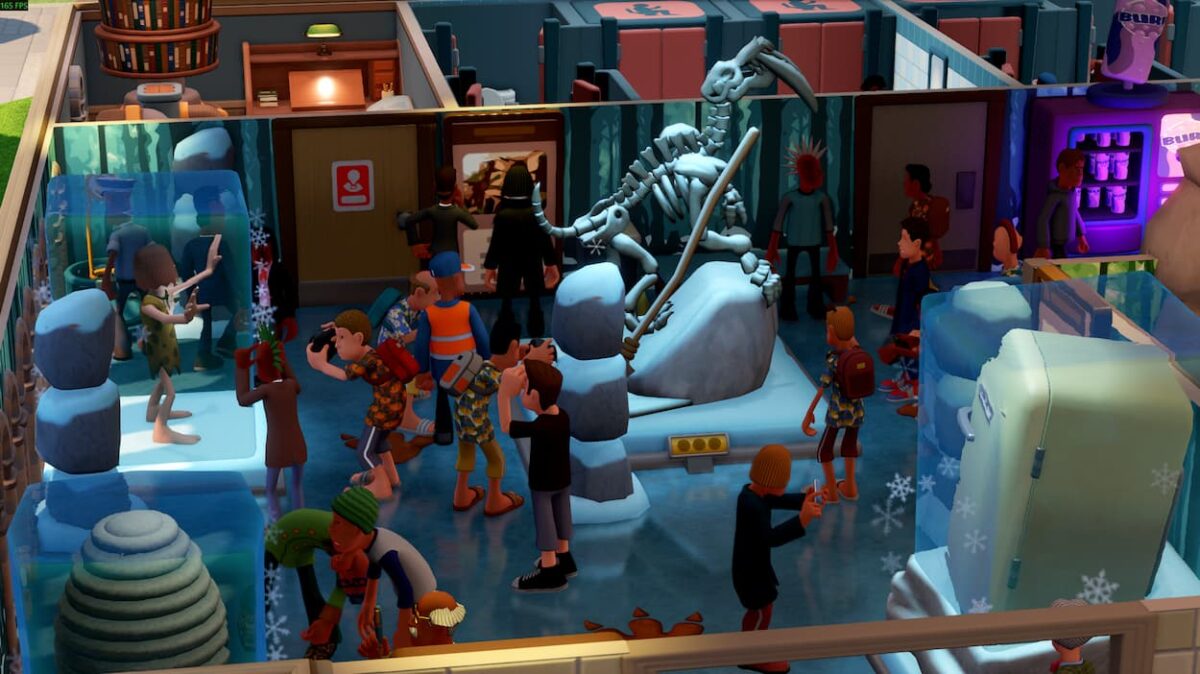
It’s easy, when immersed in the jovial world that Two Point has created, to assume that when building a game that inherently feels light and fun to play, less goes into it than a gripping action title. Carr is quick to put me in my place, especially when it comes to Museum’s expedition system – a mechanic exclusive to Museum, that allows players to send characters off-site to dig up new exhibits rather than be confined to the walls of their own museum. In Hospital you couldn’t even modify the outer walls, and then with Campus that changed – and the next step was to allow further exploration.
“It took a while to convince me it would work,” he admits, “because I expected people to want to physically go around the world and dig things up.” Instead, the team landed on a compromise, sending characters on quest-like expeditions with their own light card-game mechanics, layered with choices (and thus consequences) rather than suddenly becoming an open-world explorer. “It took us about 19 attempts to get that right, actually,” Carr says. “It was a lot of work to get that system feeling satisfying.” The mechanic allows the studio to add gameplay twists, adding replayability without necessarily needing another new map to justify it, and without inviting the same-old repetitiveness complaints that so often plague a management-sim’s post-launch cycle.
“With all our DLC, we try not to just re-skin the existing game with a new region and more stars to collect – it’s about adding new features,” explains Carr, emphasising that the expedition format has allowed DLC content to turn the game into something new and different every time. “Letting the resident artists develop their own artwork based on their moods and inspiration was a really cool feature, and it’s probably our biggest additional piece of content so far,” he continues.
The thread that beautifully binds Two Point Studios together is that it has fostered a great community that has become an asset—a collaborator rather than just an audience. Carr credits Koehler for setting that tone: “You also introduced, when you came on board, this idea of building a great community we actually work with, rather than argue with,” he says.
Koehler acknowledges that and explains the importance of this approach: “We’ve got happy, wholesome games. But it is quite intentional. We’re making the games, we’re making the content, and the studio is the way it is because that’s how we want it to be,” she explains. “If we mess something up, we own up to it, we say sorry, we fix it, and we’re respectful of the community.” That philosophy is put into practice, too; the studio’s habit of developing post-launch content that resonates with the existing user base suggests that player feedback effectively feeds straight back into the design process.
As Carr puts it, the community is “on the team,” helping shape the game’s direction and creating a happy, friendly environment. “I know it sounds very sweet, but it’s actually really important,” he continues.
Just shy of 17 months after Museum’s launch, neither Carr nor Koehler shows any sign of wanting to move on to something new. “Without sounding arrogant, it’s our most successful game, and all the DLCs are getting better. Plus, we’re not getting bored of making the content,” Carr says. “Devs quite often want to get off a game as soon as they’ve finished it. That’s not the case with Museum. What we’re doing is different every time.” He pauses, searching for the right sentiment. “We’re in the middle of something rather than the end.”
Koehler agrees: “If in a year we’re still developing Museum, we’ll be extremely happy. If people are still playing it, if people still want us to update it, then we’ll be very happy,” she says. It’s clear from her demeanour just how much joy the ongoing development of Museum has brought to her, and the team. “We’ve also really enjoyed doing the Digiverse, collaborating with other games,” Koehler continues. “It’s been my favourite thing I’ve done, I think. We’ve made loads of friends, and I just love it so much. I’ll carry on forever, if I’m allowed to.”
Ukie’s For One Night Only airs tonight, July 29th, 7-9pm BST. Here’s how to watch:
Ollie has worked across video games, esports, and gambling for more than ten years, including consultancy work in the gambling industry. His bylines include BBC, Red Bull Gaming, Esports Insider, CasinoBeats, PC Gamer, Green Man Gaming, and Esprouts, his Substack on the overlap between games and gambling. Whereas he once enjoyed the chaos of PvP and running six WoW Classic accounts to min-max every aspect of his gaming life, Ollie now enjoys a tycoon or management game with far less pressure (and people) involved.

Update 07/29/26: It appear that over night, Riot updated the release times of LoL Classic on the FAQ page. We also noticed a tweet from the Polish LoL account saying…