Craig Robinson is an experienced gaming and esports writer with nearly a decade of coverage experience since 2015. With a background in software engineering, he combines his journalistic expertise with a strong understanding of technical SEO and web development fundamentals. He’s passionate about covering MMO games, competitive esports, and crafting guides that help players get the most out of their favorite titles. He's been writing about gaming and esports for over 10 years, which started as for fun project during university. He has since developed his skill set, contributing to newsrooms coverage of key games and event, and blending evergreen content strategy and a solid grasp of content marketing fundamentals. His work has appeared in Esports News UK, Gamer Guides, theEscpaist, and VideoGamer, and he now contributes to Gamehub's review team. When he’s not writing, Craig can usually be found running, at the gym, or tinkering with coding projects to keep his GitHub active.
Gaming stocks of the week: AI bubble and gaming hardware, gaming media and more

Welcome to the first edition of GamesHub’s weekly gaming and gaming-adjacent stocks report. Stocks and broader macro business factors are often underappreciated in the space, but they do reflect industry movements that affect the consoles you buy and the games you play.
We’ve certainly picked an interesting week to start, with gaming-adjacent things kicking up a fuss in media, physical sales discourse, and AI and hardware dominating this week’s headlines.
Media gets hit, and the rise of gaming on traditional sites
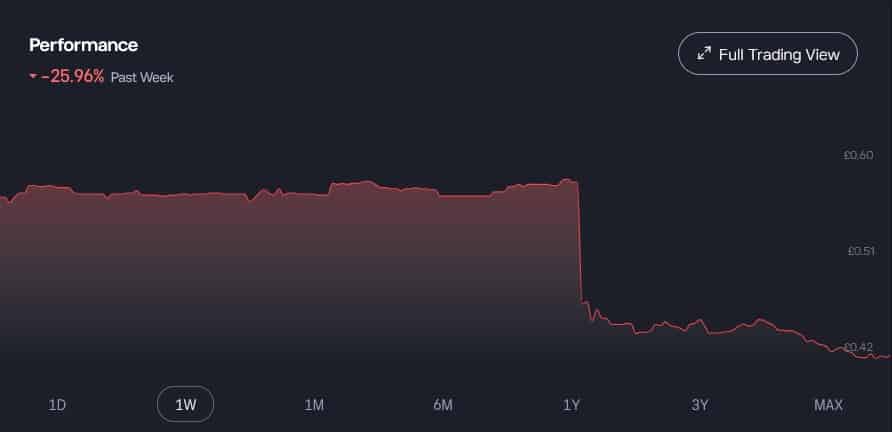
As a journalist I’ve felt the pain of seeing Google change how the world wide web connects with each other. Google is now a platform it wants you to stay on, with AI overviews and Gemini Discover features eating away at publishers’ and e-commerce traffic.
That was ever so clear with the UK’s Reach PLC #RCH.L. The media conglomerate saw its stocks tank this week, down 26%, with no recovery in sight. Why? That’s largely down to reported revenues of £232.9m in the six months to 30th June, down from £256m in the same period last year. Digital revenues were again impacted by a continuous decline in organic search traffic. The company reports that page views are down 40% year-on-year and indirect digital revenues, which are volume sensitive, down 16%.
The good news is that the declining Google ad traffic has not equally bitten into its entire revenue stream. Reach is trying to grow original reporting, away from the ‘churnalism’ tactics many coined from the 2015 SEO meta. Now, its localized news sites will need to report original, better stories to regain trust from subscribers.
It also comes as there’s a wave of media adjustments to the growing decline of Google as a traffic source. The NYT started a new wave of reader interest by buying Wordle and keeping new and returning users coming to the site for its tips and games. It’s a classic, with newspapers of old having crosswords on the page, alongside coupons and other reasons to want to read, be entertained, and buy media. UK newspaper The Telegraph has been exploring similar approaches, doing less ‘1-fact’ journalism, removing easy clicks and otherwise weaker first-day reporting.
Whether Reach goes the gaming route or uses its gaming verticals, such as Mirror Gaming, which covers FIFA, CoD and other sports-adjacent titles for its football readers to incorporate a broader gaming offering remains to be seen.
The impact of AI on stocks
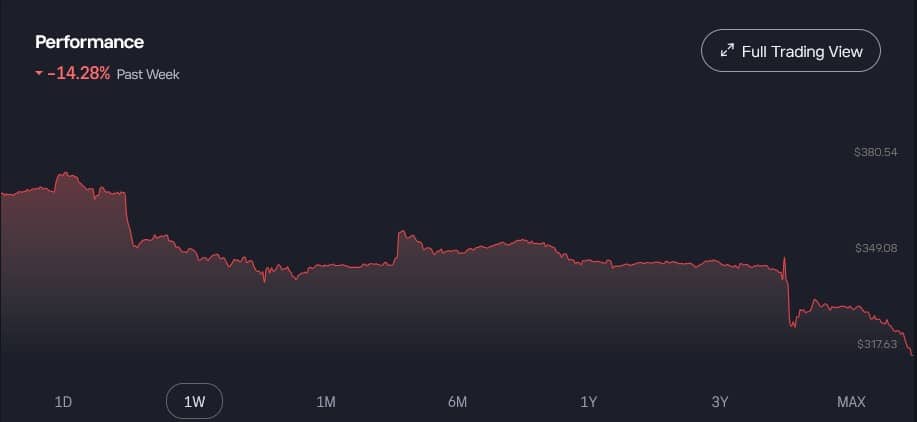
AI is often attributed to the steep price hikes of hardware over the last few years. It started with GPUs, and now it wants your SSDs and RAM sticks too. 2026 marks a wave of growing infrastructure, and both Microsoft’s reports earlier in July and Google’s own Alphabet reports on July 22nd confirm that the trend’s not going anywhere. Google #GOOG dropped 5% on the day and 13% over the week due to spending and post-earnings reports.
Google itself actually reported strong revenue. However, its free cash flow is being eaten by its ever-expanding AI data centres. Gemini, AI overviews, and other AI resourcing are eating that cash flow and sending it down. It also means that the AI bubble continues to be a win for those building the hardware.
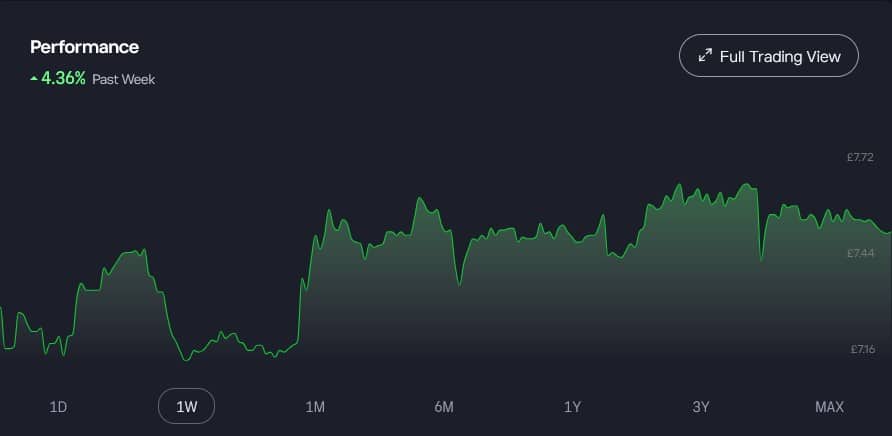
As for gaming, your consoles are still remaining expensive as Microsoft, Google and other big tech continue to buy up the limited available hardware supply. It’s firmly a seller’s market right now. That’s also evident in the stock known as #SOI.PA, Soltec S.A. The French semiconductor parts maker shared its results the same day as Google and jumped 22.94% in the past week. The AI bubble hasn’t burst; the money is just elsewhere for now.
Expect your consoles to remain expensive for the foreseeable future, both upcoming and current gen. AMD and Nvidia are still announcing deals funding various data centres too. AMD recently did a deal with Anthropic (via WSJ), and Nvidia continues to be the GPU king for data centres. Again, those data centers are driving gaming prices higher, for console and PC gamers too.
GAME goes into administration
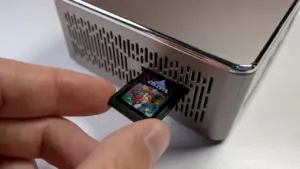
Physical media is a hot topic right now in the industry, thanks to Sony announcing it is ending physical disc production starting in 2028. It moves media to a largely digital-only front, with Xbox and Nintendo potentially the only ones still doing it by the turn of the decade. It’s made some preservationists start doing the Kazeta method to preserve their titles in its wake.
And there is no clearer sign of that than GAME going into administration. GAME is a household brand in Britain, having been the dominant chain for video games and collectibles since the 90s.
However, the company has faced declining profits through the years. Gamer consumption rates gradually shifted to digital over the last generation. Consumer reports suggest that only seven games sold over 100,000 physical copies on PS5 this generation, per marketing analyst Mat Piscatella at Circana.
It suggests that physical media has been dying for a while. There’s no surprise that GAME is entering administration, if we’re honest. It cannot sell physical games at any meaningful scale, and its pivot to merchandise is not enough to sustain the former high street monolith.
Frasers Group (#FRAS), the parent company of GAME, actually went up 5% this week despite the news. That suggests that while the high street brand and its e-commerce operations are fine at a group level, GAME and physical retail is simply not that big a deal to investors anymore, and the folding of a money-draining venture actually drums up positive investor-level sentiment.
Upcoming gaming stocks next week
Next week, we are building up to some genuinely interesting gaming stock news. Games Workshop, the company behind the Warhammer 40,000 and Age of Sigmar IPs, will have its own reports. Given that the tabletop company and the licensing of its IP to video games have some rather large titles coming out, it will be interesting to see what they say. Dawn of War IV, due to release in September, alongside Total War: Warhammer 40,000 are both big titles that could see a market reaction.
We’re expecting another gameplay trailer for Warhammer later today, showcasing ranged combat and it’ll be interesting to see if there’s any move in the market after its delivery.
There’s also Roblox’s earnings report coming up next week, which has had a lot of strong indie games to copy from this year. There’s also AI integration in Roblox to vibe code new games to help make game development more accessible, and increase the marketplace offering too. AI can make investors happy one day, but dreadfully upset the next. Which way will this one go?










Categories


Latest News

Over the weekend, my DnD group gathered for our semi-weekly session of Phandelver. Some off-the-cuff conversation led to us talking about the World of Warcraft DnD leak. Given that we…