Our team consists of a rotating staff of games enthusiasts who love journalism and journalists who love video games.
Sony Patents Revolutionary Buttonless Touchscreen PlayStation Controller

By GamesHub
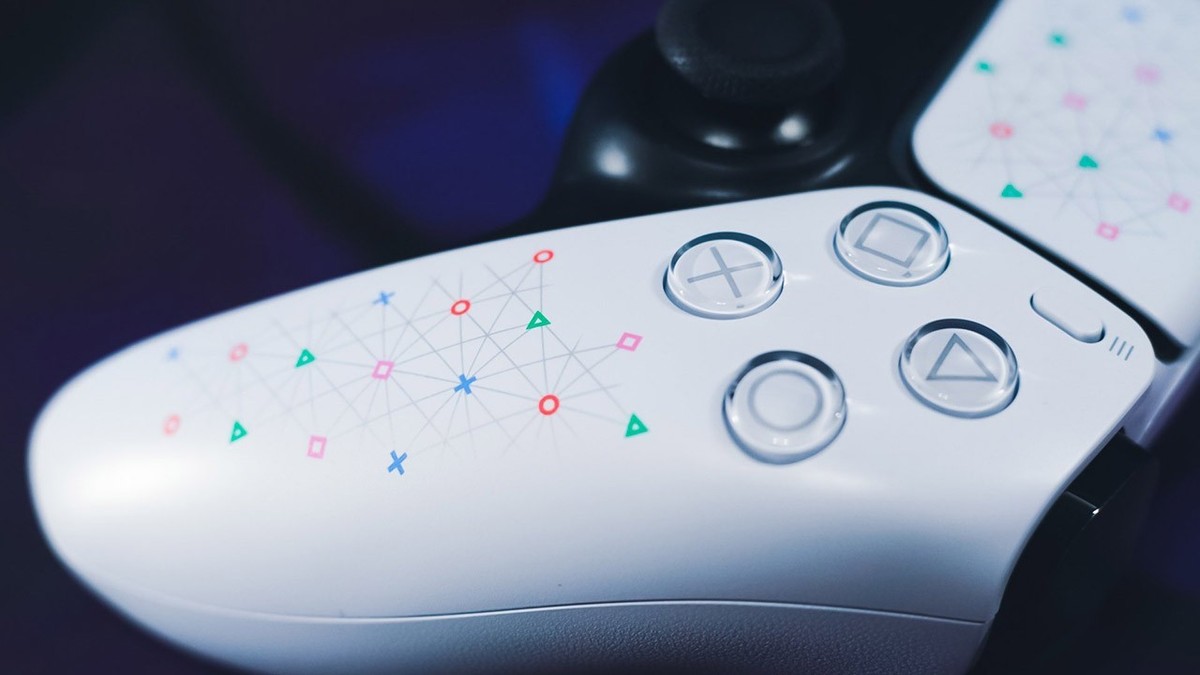
The PlayStation DualSense controller is widely regarded as one of the most innovative pieces of gaming hardware in recent years, thanks to its haptic feedback and adaptive triggers.
However, Sony Interactive Entertainment may be looking to move beyond physical buttons entirely.
A newly discovered patent suggests that the future of PlayStation gaming could involve a buttonless touchscreen controller.
This experimental design represents a massive departure from the traditional gamepad layout that has defined the industry since the original PlayStation launched in the 1990s.
Here is everything we know about Sony’s vision for a touch-based future.
How the Sony Buttonless Touchscreen Controller Works
According to the patent filings first reported by SlashGear, the proposed device replaces the traditional face buttons (Triangle, Circle, Cross, Square), D-pad, and even the analog sticks with a large, dynamic touchscreen interface.
Unlike a smartphone, however, this controller aims to replicate the “feel” of physical inputs through advanced tactile technology.
The patent describes a surface capable of haptic illumination and localized vibration.
This means that when a player “touches” a virtual button on the screen, the controller provides precise sensory feedback to mimic the sensation of a mechanical click.
By removing physical components, Sony could theoretically create a controller that is entirely customizable depending on the game being played.
Customisable Layouts for PlayStation 6 and Beyond
One of the biggest advantages of a touchscreen PlayStation controller is the ability to reconfigure the interface on the fly.
In a racing game, the screen could display a speedometer and gear shifts; in a complex RPG, it could provide a dedicated hotbar for spells and inventory management.
This level of customization would be a game-changer for accessibility in gaming.
Players with limited mobility could resize buttons, move inputs to more comfortable positions, or simplify the layout entirely.
For Sony, this move aligns with their recent efforts in inclusive design, such as the PlayStation Access Controller.
Speaking of controllers, we recently hunted down the rarest PS5 DualSense controllers.
Challenges for the Buttonless Controller Design
While the technology sounds futuristic, it faces significant hurdles – most notably muscle memory and tactile reliability.
Hardcore gamers rely on the physical “edges” of buttons and sticks to navigate games without looking down at their hands.
A flat glass surface, regardless of how good the haptic feedback is, risks losing that intuitive connection.
Furthermore, there are concerns regarding battery life and durability.
Driving a high-resolution touchscreen alongside the existing haptic motors of a DualSense would put an immense strain on the internal battery.
Sony would need to implement significant breakthroughs in energy efficiency to make a buttonless controller viable for long gaming sessions.
Is This the Future of PlayStation Hardware?
It is important to remember that tech giants like Sony file hundreds of patents every year, many of which never make it to the mass production line.
However, this patent signals that Sony is actively investigating how to merge the versatility of mobile gaming interfaces with the power of home consoles.
Whether this technology is intended for a PlayStation 6 (PS6) peripheral or a dedicated cloud-gaming handheld, it proves that Sony is not afraid to challenge the status quo.
For now, the DualSense remains the gold standard, but the days of clicking physical buttons may eventually be numbered.









Categories


Latest News

27 July 2026
News
Over the weekend, my DnD group gathered for our semi-weekly session of Phandelver. Some off-the-cuff conversation led to us talking about the World of Warcraft DnD leak. Given that we…