I have never been a huge fan of racing board games, likely because I’m not very good at them. However, after a few rounds of Heat, I can safely say that perhaps some racing games are, in fact, for me. What I think wins me over here is the simplicity of the experience – I find most racing games overcomplicated as designers work towards realism, but with Heat, I feel right at home.
A pretty straightforward experience
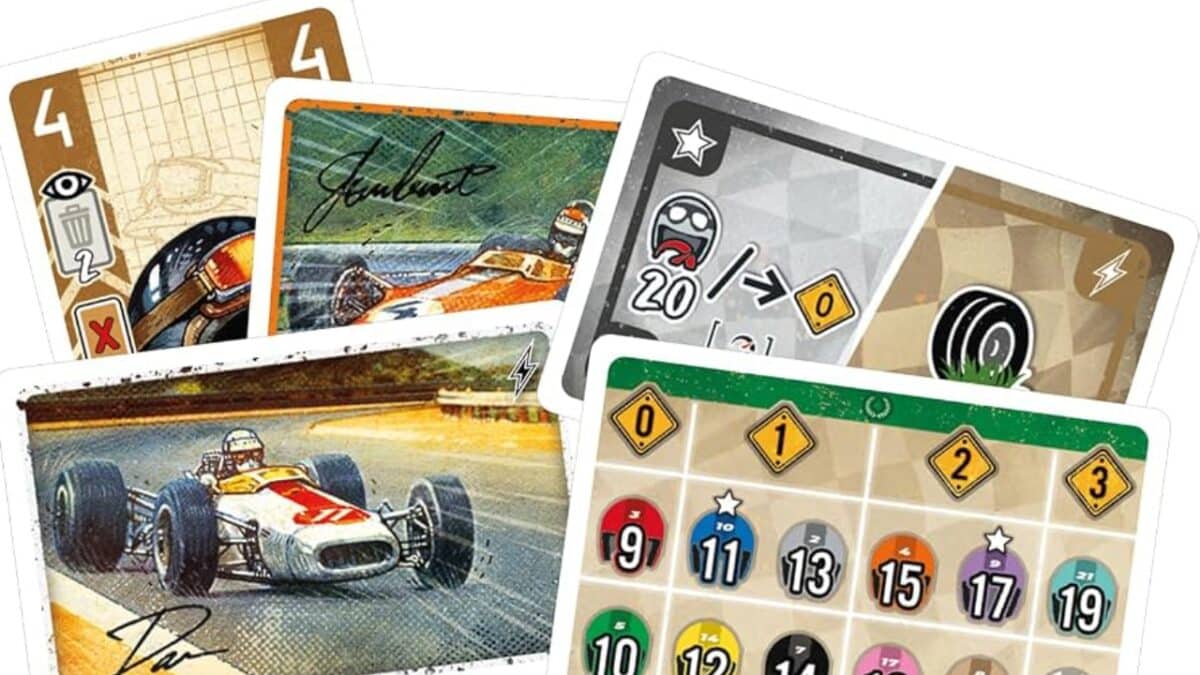
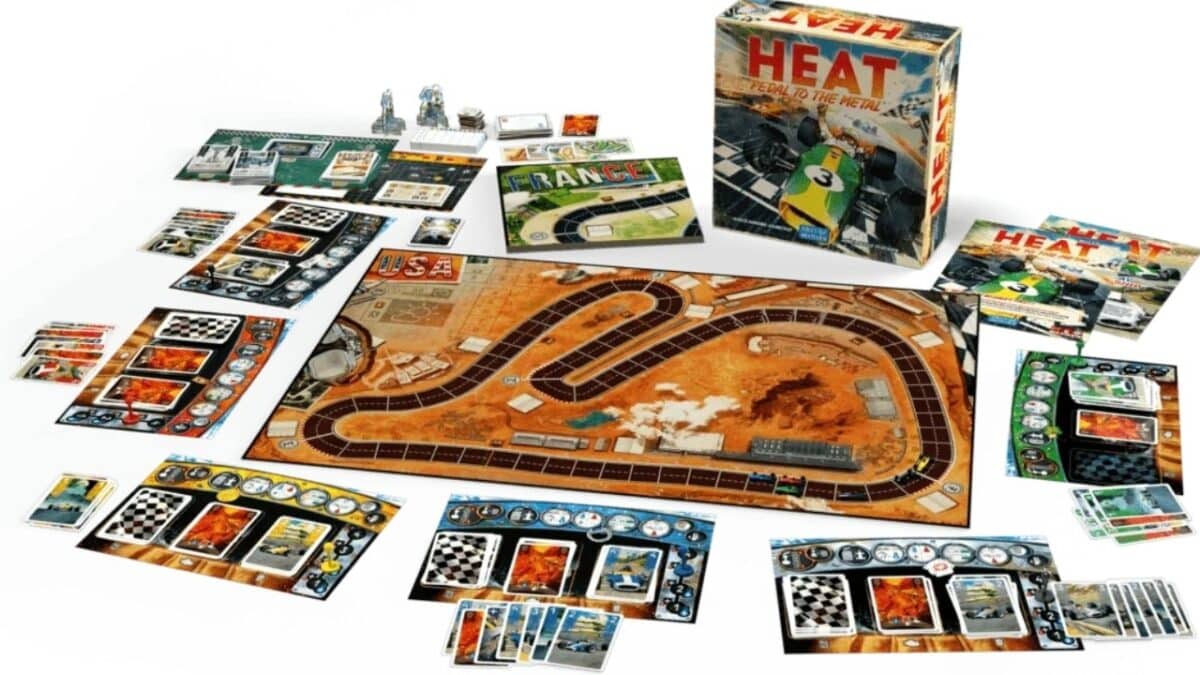
In Heat: Pedal to the Metal, players will use cards to race around a track, attempting to use speed at the right time while not spinning out on corners, overheating their engines, or becoming overwhelmed by stress. It’s a really nifty system that uses card play as its main mechanic, while doing a decent job simulating what I would assume are the ins and outs of a regular car race.
With four courses to choose from, I also enjoyed the choice and variety that the game provided. It’s not the norm for games to have double-sided boards with unique sides usable at all player counts. It’s even rarer to get two boards in the box.
Understanding what can hold you back
There are a few systems at play here surrounding speed, stress, and overheating. I found it just enough to keep things engaging while not being too much for even novice board game players to handle. And the logic behind these systems makes sense as well.
Push your car too hard, and you might overheat, which adds cards to your hands that won’t benefit your race or strategy at all. Head into a corner too fast, and you’ll spin out. These are just universal concepts that are easy to understand – they are logical problems with defined causes and effects.
Knowing what drives you forward
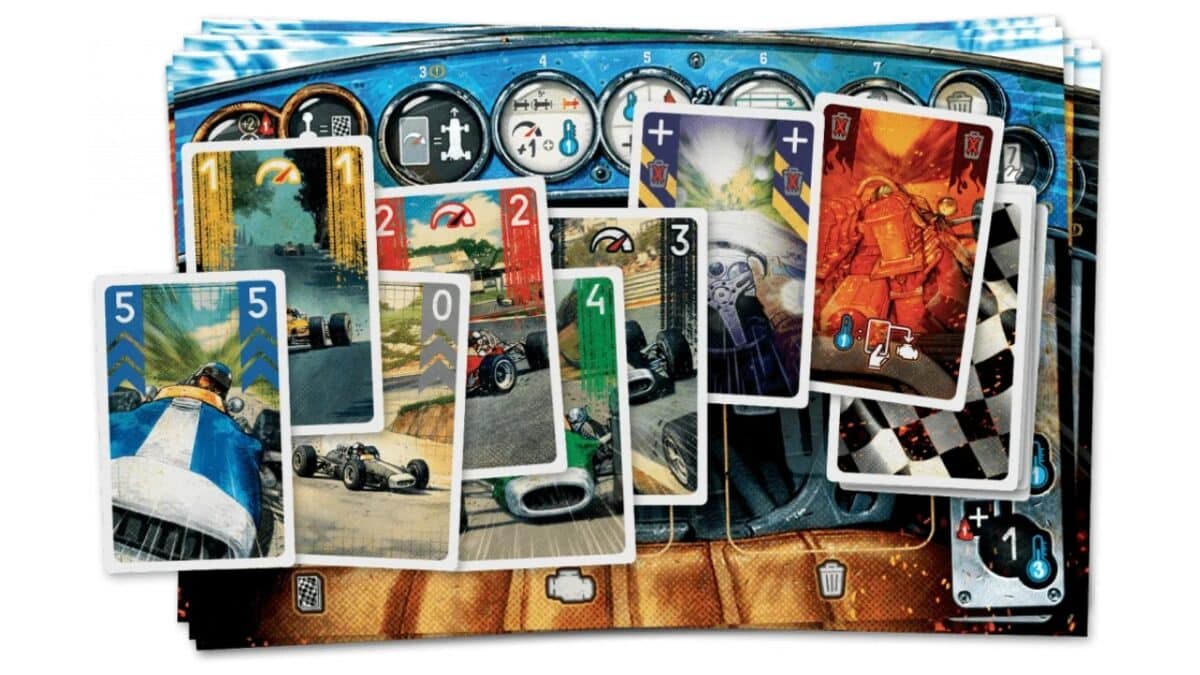
There is a really nice balance here of various mechanics, but again it is not overly complicated. You shift up and down a gear, with the option to shift even more gears at the cost of Heat cards in your discard pile. You then check what gear you are in (1-4) and have the option to play that many cards.
As you add more heat to your deck, you dilute the cards you draw, and ultimately the card you play, so there is a defined give and take you need to be constantly aware of. What I like about the gear system, though, is that you have to play as many cards as your gear indicates – that means you cannot play only 2 cards if you are in third gear; you must play three. Cards are how you’ll progress along the track, and generally more cards mean more speed. The fun here is balancing these two things as you head into corners, where too much speed would be a bad thing.
Heat cards are wasted cards in your hand, and stress cards will require you to draw more cards and add more speed than you might have wanted – this could be great on a straightaway where you are trying to move ahead of the pack, but would be a disaster in a corner. That’s the fun of Heat: balancing those things.
A well-thought-out, enjoyable experience
It’s the ease of play and quick pace of the experience that makes the game so enjoyable in my opinion. Even if you are losing, and perhaps losing badly, the games go so quickly. Even when they don’t, there is enough unpredictability to allow players farther behind to catch up in certain circumstances.
This helps keep the game balanced, but also introduces a bit of luck that some players might not enjoy. I found there was enough strategic thinking to offset the luck of the draw – after all, you choose to add heat cards to your deck, or play stress cards in potentially devastating circumstances.
For myself, it’s the relative simplicity that Heat offers that makes it so compelling. While racing games aren’t likely to become my favorite type of game any time soon, I’ll almost always be willing to sit down for a game of Heat: Pedal to the Metal.
What you might want to know
Are there expansions for Heat: Pedal to the Metal?
Yes, there are three expansions currently available for Heat: Pedal to the Metal, all adding new ideas.
Is Heat: Pedal to the Metal anything like Thunder Road Vendetta?
No, while both racing games, Thunder Road Vendetta focuses on chaos and crashes, while Heat is a much more traditional racing experience.
Authored by
Adam Roffel
Adam has been writing about video games since 2014 and board games since 2018. If he's not rooting for the Toronto Maple Leafs or Toronto FC, he definitely has a controller in his hand - probably playing on a Nintendo platform - or is sitting at a table playing a board game. Adam also has firm opinions on a few key topics: there are much better board games than Settlers of Catan, and Nintendo doesn't need to compete with Sony and Microsoft.
PUBG Mobile is getting decidedly more supernatural with the launch of its Version 4.6 update, introducing vampires, monster hunting, new collaborations, and the return of Ocean Odyssey. Available from 8…