Adam has been writing about video games since 2014 and board games since 2018. If he's not rooting for the Toronto Maple Leafs or Toronto FC, he definitely has a controller in his hand - probably playing on a Nintendo platform - or is sitting at a table playing a board game. Adam also has firm opinions on a few key topics: there are much better board games than Settlers of Catan, and Nintendo doesn't need to compete with Sony and Microsoft.
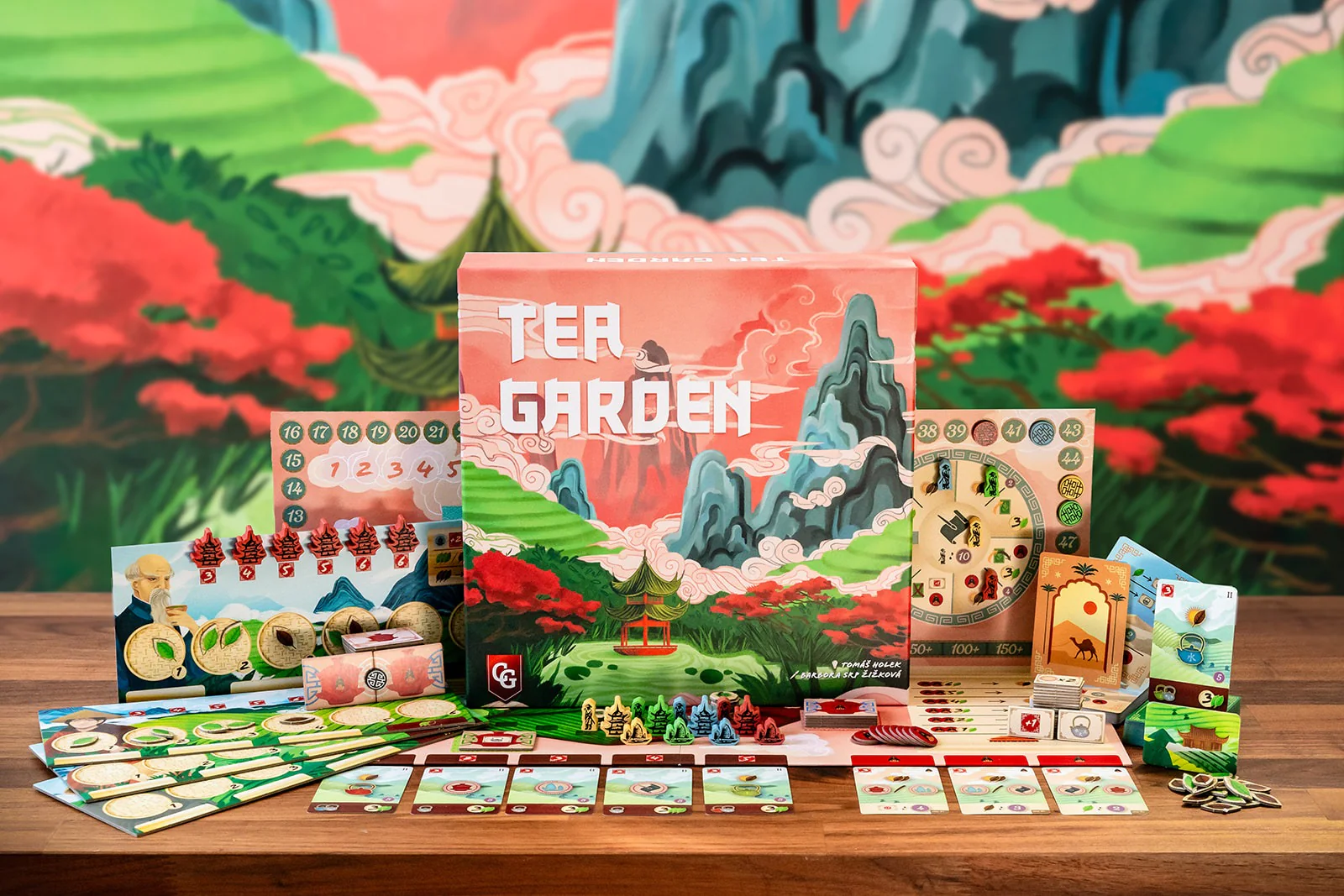
Tea Garden has been on my list of games to play ever since I saw it at GenCon 2025, and so I was quite thrilled when Capstone Games sent over a copy of the game for us to review.
The production of this game is outstanding, with a lot of care put into the artwork, as well as the component quality. Good components do not always make a game good, though, so let’s dive in and see if Tea Garden is worth the investment.
Tea Garden is built on a few familiar game mechanics
Tea Garden mixes a few game mechanics I really enjoy, specifically resource management, hand management, and deck building. The beautiful setting and the snappy turns make this a game I really enjoy teaching, and one that I know my group will enjoy for years to come.
The goal of the game is to earn points, and points are earned in a variety of ways. We will link off to a how-to-play video below that goes into more depth, but will provide a brief overview just to get you a little familiar with the process.
Each player starts with the same hand of cards, and these cards have a strength value for taking main actions and a secondary action printed on the card. Each player gets 1 main action, 1 secondary action, and unlimited free actions per turn. As the main action, the player looks at the card(s) they placed for that round and adds up the strength. They can then take a main action based on that strength. This could be building a pagoda onto the board and expanding their reach, buying an action card to add to their deck for future turns, selling tea to the caravan for points, or turning green tea leaves into fermented brown tea leaves that don’t decay over time.
Secondary actions will drive your strategy
Secondary actions are printed on some cards, and if they are the top card you play when determining your strength, you can use them. These might allow you to move up the river, gain tokens or teacups, and move on a few other tracks.
Ultimately, these all provide immediate and sometimes future bonuses that will help build your engine, allowing you to get closer to bigger rewards and better cards.
Lots to consider, lots to strategize around
There is a lot going on in Tea Garden, but thankfully none of it is all that difficult once you play a few rounds.
If we want to get a perceived negative out of the way right now, I think some people will find that there is too much to do. There are a ton of different ways to earn points in Tea Garden, especially when looking at the river track, studying at the university, producing tea cups, and more. This is one of those games that you need to learn one simple thing: you cannot do everything well, so perhaps focus on one aspect and do a little bit of others.
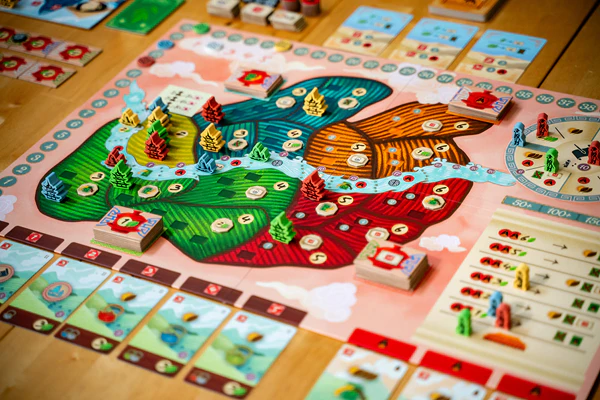
And honestly, that isn’t a concern for me, just one I think people should be aware of. I like the idea of diversifying my strategy but ultimately focusing on one or two areas. I think that is what makes Tea Garden so enjoyable. There isn’t one strategy or path that leads to victory. What you do will depend on the cards you are able to buy, the bonuses you are able to use, and so on.
A game that gets better the more you play it
The game requires a good knowledge of all the moving parts, but when to prioritize each is where the strategy lies. To that end, Tea Garden is a game that gets better and better the more you play it, as you learn the various cards that are available and how to best use them.
After a single play, we have had people with wildly different opinions, but those opinions seemed to level out as the game went along. The people who loved it a ton on their first go came down just a bit, and people frustrated by their first play ultimately found a really enjoyable experience. This doesn’t happen often in the board game space, in my opinion, but it is the case here.
For me, Tea Garden has a lot of great decisions you get to make each turn, and these decisions feel valuable. At the same time, it doesn’t feel like a poor decision once or twice is going to sink your entire game either.
I like the idea of having three (sometimes 4, if you pay) actions per turn, and the decision to either take fewer actions but at more power, or more actions but at less power. This decision is often made for you if you really need something specific – a higher-powered card, for example – but when you have lots of equally good options before you, I love making that decision.
A unique deck building experience
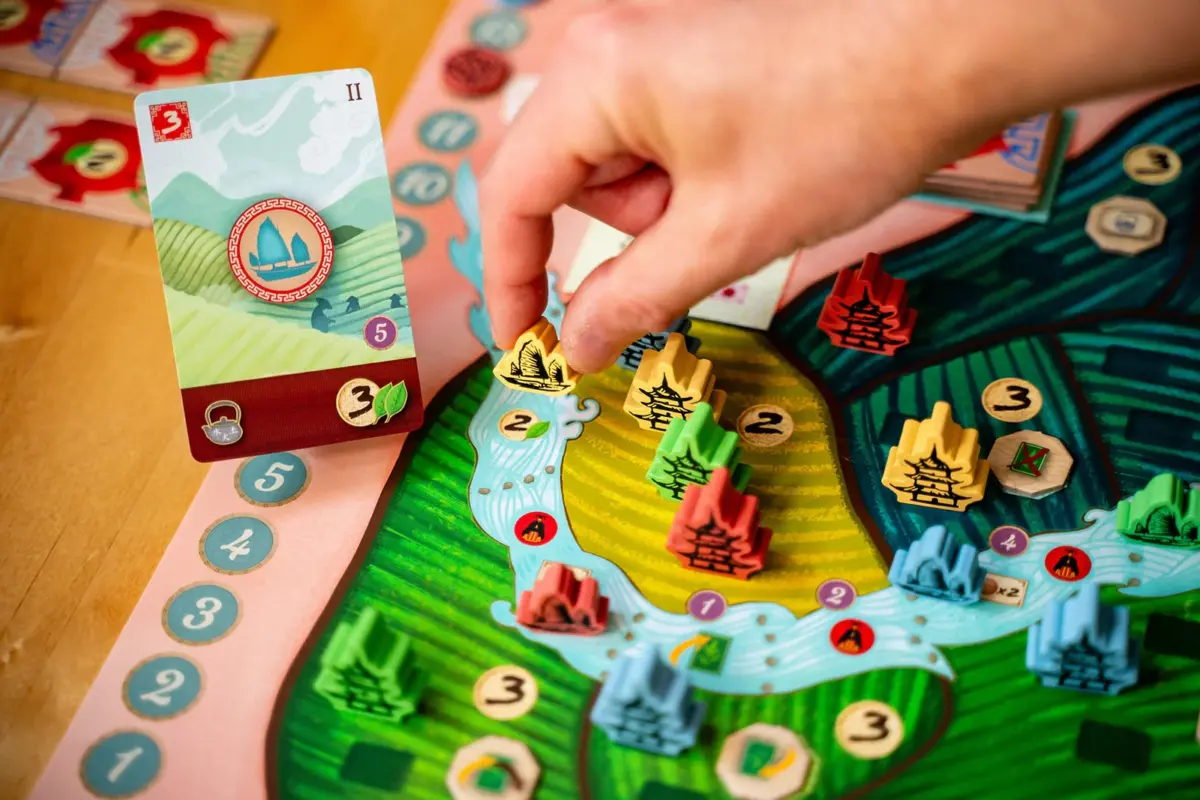
Another feature I love is something I think should be in all deck-building games. When you buy cards in Tea Garden, they don’t go into your discard pile. It doesn’t go on top of your deck either, but instead goes straight into your hand. I love that you can expand your strategy by buying a card one turn that you can instantly use on the next turn. There is no waiting to use that amazing card you spent so much on.
Tea Garden has been such an enjoyable experience for me, and with an expansion on the horizon, I cannot wait to see how this game will evolve. While I do think this will be overwhelming for some players, it’s a nice mid-weight experience that is not too difficult to teach, and not too difficult to play.
What you need to know
How long does it take to play Tea Garden?
Although the box says 90 – 120 minutes to complete a full game of Tea Garden, we suggest giving yourself an extra 30 minutes or so, regardless of player count, for learning the rules and in-game decision making above and beyond what the designers expect.
What mechanics will I find in Tea Garden?
Tea Garden uses a number of different mechanics to make a unique experience. There is deck building, resource management, and a bit of worker placement (kinda).
Should I try Tea Garden if I am new to board games?
Tea Garden is a medium-weight title that is better played by board game players somewhat familiar with the hobby. The number of different mechanics to grasp and strategies to work through might be a bit tough for newer players.
I really enjoy this Japanese theme, can you recommend other games I should try?
If you enjoy Tea Garden and the cozy idea of the game, we would highly recommend Rivers of Gold and Tokaido.