If you’ve spent any time in the indie scene over the last few years, you’ve probably noticed two things: everyone loves a good deck-builder, and everyone is still trying to figure out how to put a “Soulslike” spin on every genre under the sun.
Usually, when a game claims to be a “Soulslike deck-builder,” it just means it’s hard and has a dark aesthetic. But Death Howl, the latest project from the three-person team at The Outer Zone, actually tries to earn that label.
It’s a game that doesn’t just use grief as a backdrop. It makes you feel the weight of it in every card you play and every tile you move.
Death Howl Story
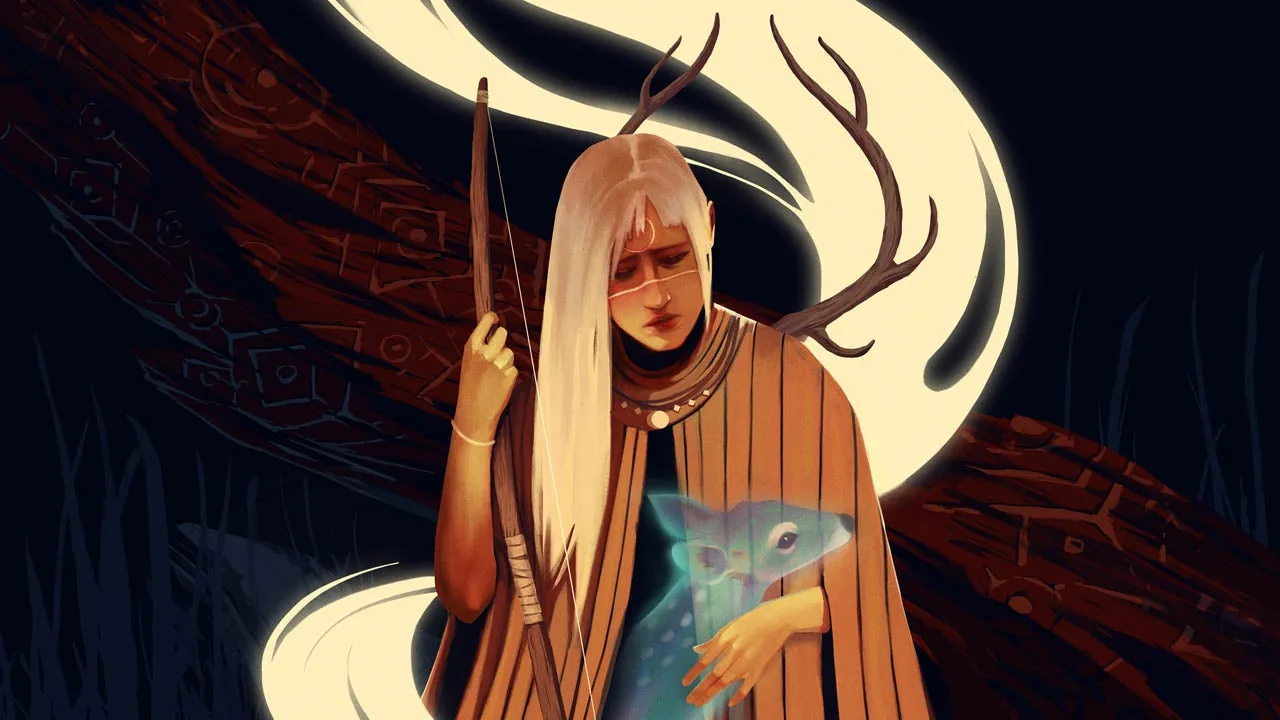
You play as Ro, a hunter from a small, myth-shrouded tribe. The game kicks off with a punch to the gut: Ro has lost her young son. Instead of staying home to mourn, she hears whispers from another world and decides to dive headfirst into the spirit realm to get him back.
It’s a classic “Orpheus descending into the underworld” setup, but flavored with Scandinavian folklore and a jagged, bleak pixel art style that makes the world feel ancient and cold.
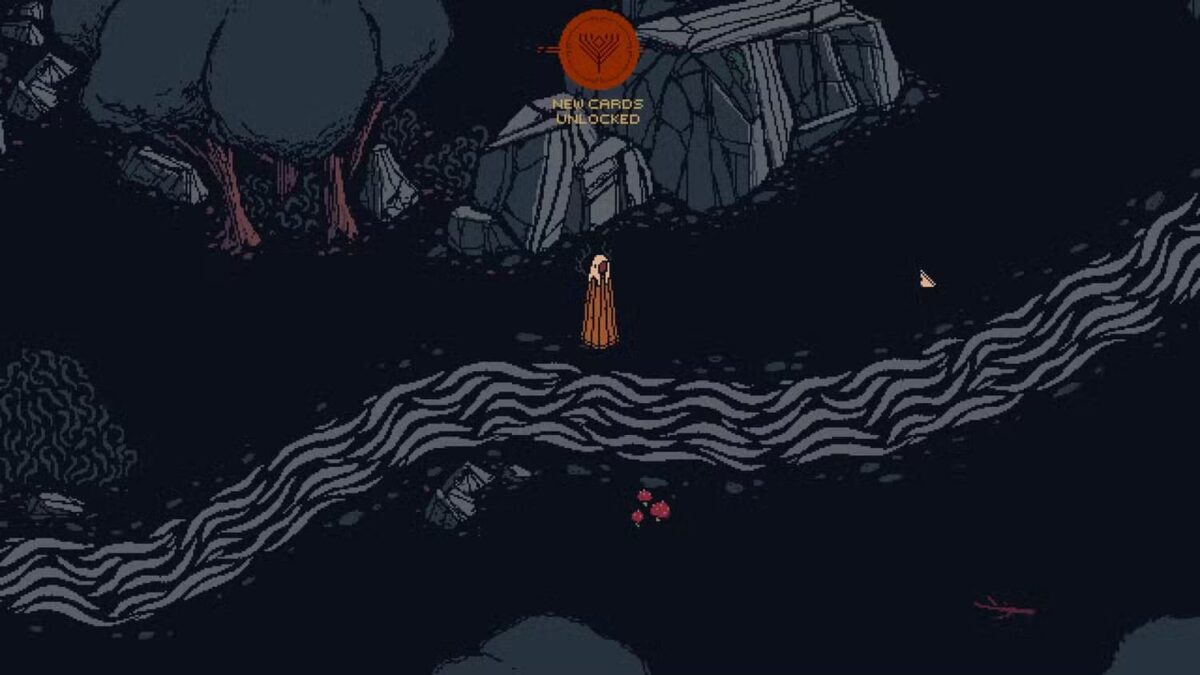
What’s interesting here is that the narrative isn’t shoved down your throat with long cutscenes. It’s told through the world itself—the “Meadows of Delusion,” the “Forest of Howling Shadows,” and the strange, often untrustworthy spirits you meet along the way. Ro isn’t a hero; she’s a grieving mother who is arguably making a massive mistake by defying death. That tension carries through the whole experience.
Death Howl Gameplay
If you’re a fan of the Slay the Spire series or Into the Breach, you’ll recognize pieces of Death Howl, but the way they’re mashed together is what makes it stand out.
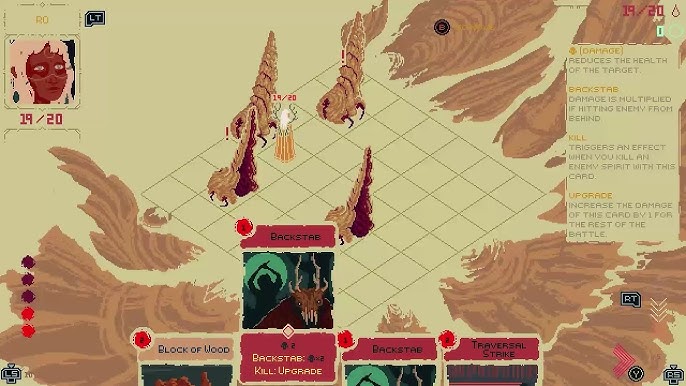
Most deck-builders are about finding a “broken” combo and steamrolling everything. In Death Howl, you’re constantly fighting for your life on a tactical grid. Each turn, you get five mana points. Here’s the catch: that mana is used for everything. Want to play a powerful “Aim for the Heart” arrow card? That’s two mana. But you’re standing right next to a spirit that’s about to cave your skull in, so you need to move three tiles away. That’s another three mana. Just like that, your turn is over.
This creates a constant, agonizing dilemma. Do you stay and do damage, hoping your “Block of Wood” shield card can tank the hit? Or do you run away to a corner like a coward, wasting your turn but surviving to draw another hand? The game also enforces a “full discard” rule at the end of every turn. If you don’t use a card, it’s gone. There’s no hoarding the perfect hand for the boss; it’s all about surviving the now.
The “Souls” in the Machine
The Soulslike tag comes into play with the progression system. As you kill enemies, you collect “Death Howls,” this game’s version of Souls or Echoes. You use these to craft new cards and upgrade your skill tree at “Sacred Groves,” which act as your bonfires. When you rest, your health is restored, but every single monster you just spent an hour clearing out respawns.
And yes, if you die, you drop your accumulated Howls. The game is notoriously “jerk-ish” about this. There are no “undo” buttons. If you miscalculate a move and walk into a poison tile because the pathing system decided that was the shortest route, you just have to eat it. The onboarding is also incredibly steep. There’s almost no tutorial; you’re expected to learn enemy patterns by dying to them. It’s “tough love” gaming at its peak.
One of the more controversial design choices is the “Realm Reset.” There are four major realms, and while you keep your deck, your skill tree progress often feels like it’s starting from scratch when you move to a new area. It keeps the challenge high, but for the average gamer who just wants to feel “powerful,” it can feel like the game is constantly pulling the rug out from under you.
Visuals and Vibe
Visually, Death Howl is stunning in a very specific, “crunchy” way. The pixel art is detailed but intentionally uses a muted, almost oppressive color palette. It’s not “pretty” in the traditional sense, but it is incredibly atmospheric. The character designs for the spirits are grotesque and weird, feeling more like something out of a fever dream than a standard fantasy game.
The sound design follows suit. It’s quiet, ominous, and uses subtle cues to tell you when you’re in trouble. It’s the kind of game that’s best played with headphones in a dark room, letting the gloom really sink in.
Final Thoughts
Death Howl is not a “comfort” game. It’s a slow, methodical, and often frustrating descent into a world that doesn’t want you there.
If you’re the type of player who loves “deckbuilding math” and doesn’t mind losing two hours of progress because you made one bad tactical choice, you’re going to be obsessed with this. The synergies you can build—like stacking shields to make your “Defensive Swing” cost zero mana—are incredibly satisfying to pull off.
However, if you have a low tolerance for grinding or games that don’t explain their mechanics, you might find yourself bouncing off this one pretty hard. The lack of accessibility options and the sometimes-vague enemy attack patterns can feel like artificial difficulty.
At the end of the day, Death Howl succeeds because it feels like a singular vision. It doesn’t care if you like it; it just wants to tell its story and challenge your brain. For a small team, the level of polish in the core combat is nothing short of impressive.
Final Score: 4/5 stars
Pros & Cons
Pros
Cons
Deep tactical combat where movement matters as much as cards.
Brutal learning curve with almost no tutorial for beginners.
Highly rewarding card synergies and skill tree customization.
Significant grinding required to bank currency for upgrades.
Hauntingly beautiful pixel art and an emotional, mature story.
“Realm Resets” can make you feel like you’re losing progress.
Extremely polished UI; runs perfectly on Steam Deck.
Pathing issues can occasionally lead you into environmental hazards.
160+ cards allow for many different character builds.
Lack of difficulty or accessibility settings for casual players.
Authored by
Ashley Turner
Ashley Turner is an entertainment journalist with over 5 years of experience covering gaming, pop culture, and digital media. Her work has appeared across multiple gaming and entertainment publications, covering breaking gaming news and industry analysis. A passionate gamer herself, she particularly loves Western RPGs and JRPGs for their storytelling and world-building. Ashley holds a Master's degree in International Media from American University and, alongside gaming, enjoys traveling and swimming in her free time.
PUBG Mobile is getting decidedly more supernatural with the launch of its Version 4.6 update, introducing vampires, monster hunting, new collaborations, and the return of Ocean Odyssey. Available from 8…