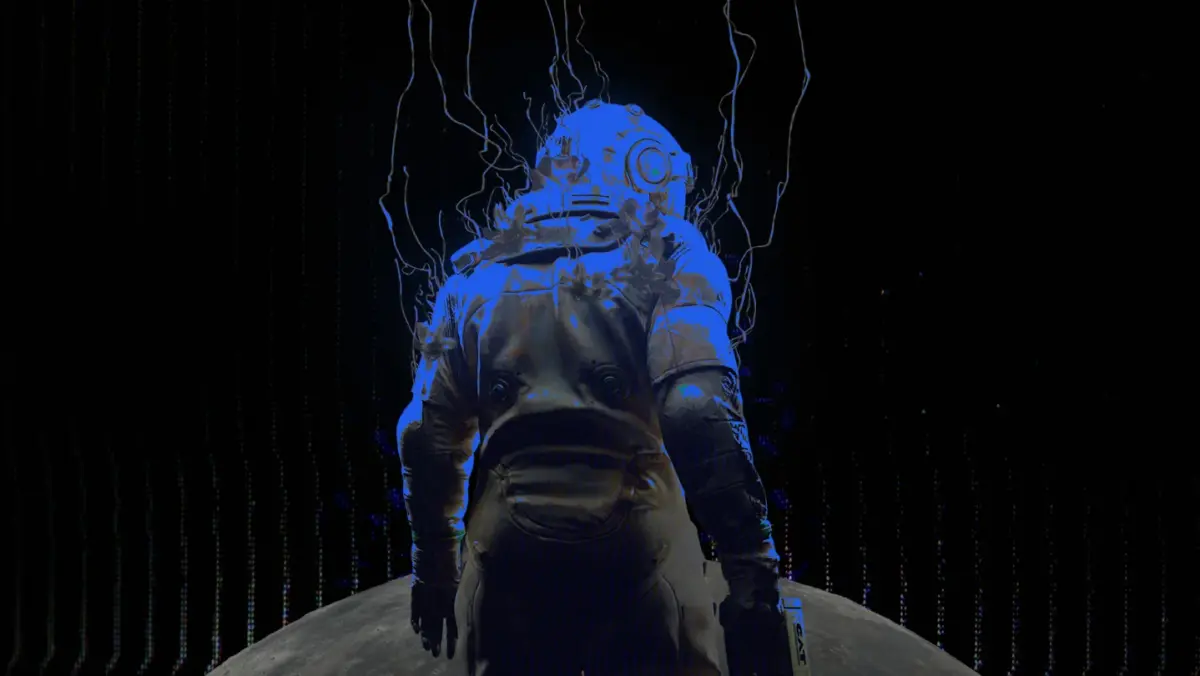
Imagine starting a job, blinking, and realizing 13 years have passed. That’s essentially the development story of Routine, the sci-fi horror game from Lunar Software that first teased us way back in 2012.
It vanished, reappeared, switched engines, and finally landed on our screens in December 2025. In the time it took to make this game, entire console generations lived and died. We got Alien: Isolation, SOMA, and a Dead Space remake. The bar for “scary space station” has been raised significantly.
So, does Routine hold up? Surprisingly, yes—but it feels like a relic. It’s a game that time forgot, an uncompromising vision of horror that refuses to hold your hand. It’s beautiful, terrifying, and deeply frustrating, often all at once.
The Aesthetic: 80s Tech in 4K
The first thing you’ll notice is how incredible Routine looks. It runs on Unreal Engine 5, but instead of shiny, futuristic holograms, you get the “future” as imagined in 1980. We’re talking chunky CRT monitors, satisfyingly clicky keyboards, and beige plastic everywhere. It’s “cassette futurism” at its finest, drawing heavy inspiration from Alien and 2001: A Space Odyssey.
The lighting is a major player here. The moon base, Union Plaza, is dark. Really dark. You’ll be squinting into shadows, praying your flashlight doesn’t die. The game looks sharp and clean, running smoothly on modern PCs, which makes the grime and abandonment feel tangibly real. You aren’t just walking through a level; you’re trespassing in a tomb.
The Sound of Silence (and Robots)
If the visuals draw you in, the sound will make you want to leave—in the best way possible. The audio design is oppressive. There’s no music to tell you how to feel, just the hum of the station and the terrifying, heavy footsteps of the “05” robots hunting you.
The soundtrack, composed by Mick Gordon (before he left) and finished by Nathaniel-Jorden Apostol, is a masterclass in tension. It’s all low drones and industrial noise that blends seamlessly with the environment. You have to listen to survive. Is that a steam pipe hissing, or a robot around the corner? You’ll find yourself holding your breath in real life just to hear better.
The C.A.T.: Your Only Friend
You don’t have a HUD in Routine. Instead, you have the Cosmonaut Assistance Tool, or C.A.T. It’s a clunky, multi-purpose gadget that serves as your flashlight, map, and battery-powered stun gun.
The genius of the C.A.T. is how it forces you to engage with the world. Want to check the map? You have to physically look at the little screen on the device, meaning you can’t see what’s in front of you. Need to open a door? You have to use the “Ultraview” mode to trace wires through the walls. It creates friction. Everything takes time, and time is something you don’t have when a robot is stomping toward you.
Gameplay: The Old School Grind
This is where Routine shows its age. It’s a game that hates you a little bit. There are no objective markers. You have to read signs on the wall to figure out where to go. If you miss a small fuse on a desk, you could be wandering for an hour.
The stealth is basic. You crouch, you hide, you wait. The robots follow set paths, so once you learn them, they stop being scary and start being annoying obstacles. And if you die? You’re sent back to a checkpoint that might be 20 minutes ago. It’s punishing in a way modern games rarely are. It demands patience and observation, punishing anyone who tries to rush.
Verdict
Routine is a game out of time. It’s a stunningly realized world that refuses to modernize its gameplay for better or worse.
It’s a must-play for fans of atmospheric horror who miss the days when games didn’t tell you exactly what to do. But be warned: it’s a slow, stressful burn. It’s not about fighting back; it’s about surviving a shift in a place that wants you dead.
Pros and Cons
| Pros | Cons |
| Incredible Atmosphere: The 80s sci-fi aesthetic is perfectly executed with stunning UE5 visuals. | Frustrating Navigation: No map markers means getting lost is a constant, sometimes tedious threat. |
| Terrifying Audio: The sound design is immersive and crucial for survival. | Basic Stealth: Enemy AI is simple and predictable, leading to repetitive waiting games. |
| Unique UI: The C.A.T. tool is a brilliant way to keep the player grounded in the world. | Punishing Checkpoints: Dying can mean replaying large chunks of slow gameplay. |
| Great Optimization: Runs smoothly on PC, looking sharp and clean. | No Hand-Holding: The lack of guidance will alienate players used to modern conveniences. |