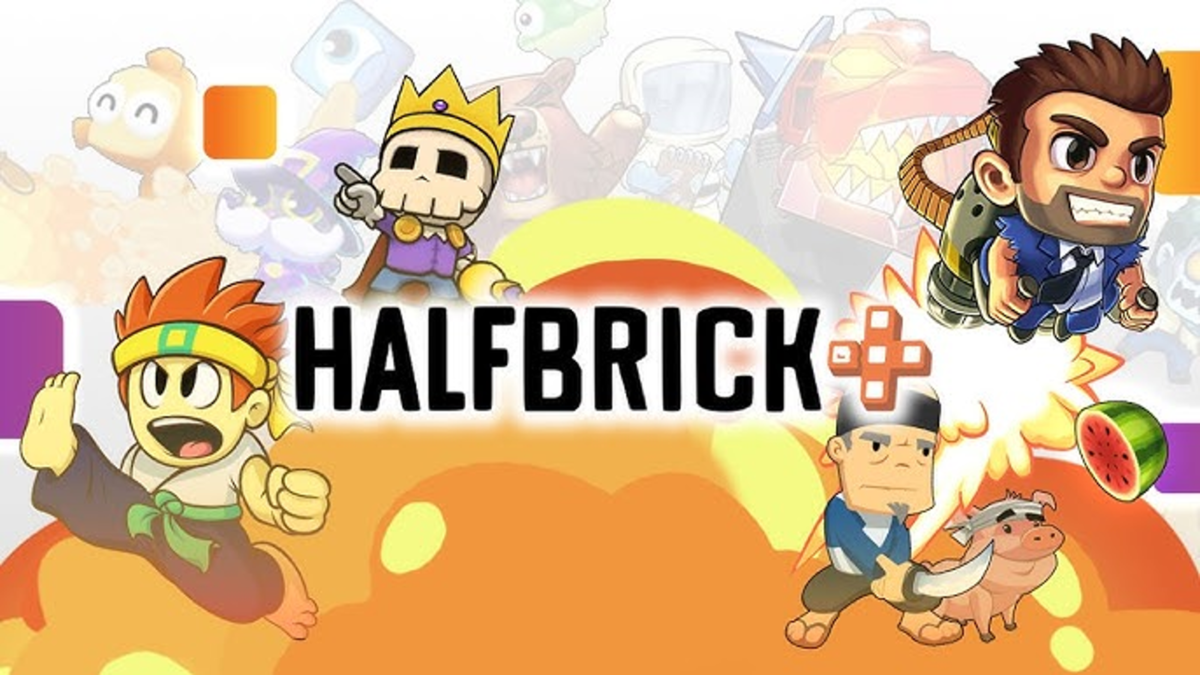
In a move that has sent shockwaves through the local creative community, Halfbrick Studios – the Brisbane-born titan behind global sensations like Fruit Ninja and Jetpack Joyride – has announced a sweeping round of redundancies.
The studio confirmed this week that 41 roles are being cut, alongside the conclusion of several international engagements.
For a studio that virtually defined the early mobile gaming era, this downsizing is more than just a corporate restructuring; it’s a sobering reflection of the “challenging period” currently facing the Australian video game landscape in 2026.
The Halfbrick Legacy: From Fruit Ninja to Industry Headwinds
Halfbrick has long been the poster child for Australian game development success.
Their transition from a small Brisbane outfit to a fully remote, international powerhouse was the blueprint for many aspiring local developers.
However, the studio’s recent LinkedIn statement cited “ongoing headwinds” and a need to ensure the business remains sustainable in an increasingly volatile global market.
Despite the evergreen popularity of their core IP, the mobile market in 2026 has become notoriously difficult to navigate.
With rising user acquisition costs and a shift in player spending habits, even a studio with billions of downloads is not immune to the economic pressures that have plagued the wider tech sector this year.
What These Layoffs Mean for the Australian Games Industry
The Halfbrick layoffs are part of a worrying trend for the Australian games industry in 2026.
While the federal government’s Digital Games Tax Offset (DGTO) has provided a lifeline for many, the “middle-class” of game studios – those too big to be nimble indies but too small to be global conglomerates – are finding it harder to secure the necessary investment for new IP.
Industry experts suggest that this “correction” may lead to a more cautious approach from local investors.
However, there is a silver lining: the talent departing Halfbrick consists of some of the most experienced developers in the country.
We are likely to see a surge of new, smaller indie “micro-studios” emerging from the fallout, much like the explosion of creativity that followed the closure of Australia’s major AAA studios in the early 2010s.
Looking Ahead: Halfbrick’s 2026 Strategy
Despite the job cuts, Halfbrick has indicated that they are not stepping away from development.
The studio remains committed to its flagship titles and is reportedly focusing resources on “future-proofing” their technology stack.
For fans of Jetpack Joyride, the updates will likely continue, but the scope for experimental new titles may be narrowed as the studio prioritizes profitability over rapid expansion.
As we move further into 2026, the story of Halfbrick will serve as a vital case study for how Australian studios must adapt to survive a global industry in flux.
After the Halfbrick Shock: Top 5 Upcoming Australian Indie Games in 2026
It’s easy to focus on the immediate “industry headwinds” that are currently buffeting even the largest local outfits.
However, Calcio in 2026 is anything but bleak; in fact, the creative pulse of Australian indie dev is stronger and more diverse than ever.
Following the closure of major AAA studios in Australia over a decade ago, a “phoenix” effect occurred: experienced developers founded dozens of nimble, ambitious micro-studios.
This has laid the groundwork for a stunning 2026 lineup, which is benefiting from the newly active Digital Games Tax Offset (DGTO).
While the landscape is shifting, the creativity is not.
From cozy sims to hard-hitting tactical shooters, here are the top 5 upcoming Australian indie games that demonstrate why the local industry is entering a new golden age.
1. Mars First Logistics (Out of Early Access)
- Developer: Shape Shop (Melbourne)
- Genre: Physics Simulation / Building
- Platform: PC, Consoles (Expected)
Melbourne-based Shape Shop’s Mars First Logistics has already captured a dedicated audience in Early Access, but 2026 marks its official full launch.
The premise is delightfully simple yet tactically complex: you must build increasingly bizarre, physics-based vehicles to transport various odd-shaped cargo across the rugged, low-gravity Martian terrain.
The game is a masterclass in elegant, functional design, encouraging player creativity and failure in equal measure.
Mars First Logistics is arguably the standard-bearer for a new wave of Australian simulation games, and its official launch is one of the year’s most highly anticipated milestones.
2. Totem Teller
- Developer: Grinning Owl (Brisbane)
- Genre: Puzzle Platformer / Art Game
- Platform: PC, Nintendo Switch
The Brisbane indie scene has been buzzing about Totem Teller for years, and 2026 is finally the year this visually arresting puzzle platformer is set to arrive.
Following a successful Kickstarter campaign, Grinning Owl has crafted an experience that feels like playing through a traditional folklore painting.
You control a lonely storyteller traversing a fractured, watercolor world, physically rearranging “pieces” of forgotten narratives to restore the lore and unlock memories.
With its emphasis on passive, environmental storytelling and a soundtrack that is already generating ARIA hype, Totem Teller is a shoo-in for 2026’s “Best Art Direction” awards.
3. Copycat
- Developer: Spoonful of Wonder (Sydney)
- Genre: Narrative Adventure / Cozy Sim
- Platform: PC, Consoles
The cozy sim genre is booming globally, and Sydney’s Spoonful of Wonder is set to make a massive splash with Copycat.
This narrative adventure explores the complex emotional relationship between a recently adopted, somewhat grumpy shelter cat named “Copycat” and its new elderly owner.
The game’s charm lies in its emotional realism; you experience the world through the cat’s perspective, balancing playful interactions and mischief with the quiet, domestic life of its owner.
However, when Copycat is seemingly replaced by a double, the game takes a dramatic turn. Copycat promises to be one of the most heartwarming (and potentially heartbreaking) narrative games of 2026.
4. The Starship Inspector
- Developer: Otherworld Legends (Adelaide)
- Genre: Procedural Narrative / Simulation
- Platform: PC
Adelaide-based Otherworld Legends is tapping into the Papers, Please vein of narrative-through-process with the wonderfully odd The Starship Inspector.
As the eponymous inspector, you are tasked with boarding bizarre, procedurally generated alien starships to conduct customs inspections.
You must scan cargo, interrogate eccentric crews, and apply a complex set of ever-shifting bureaucratic protocols.
However, the game thrives on ethical dilemmas: do you accept an alien bribe to let a mysterious (and potentially invasive) organism pass, or do you follow the letter of the law?
The Starship Inspector is set to be one of 2026’s sleeper indie hits, offering endless, chaotic replayability.
5. Hollow Knight: Silksong (Confirmed Release Window)
- Developer: Team Cherry (Adelaide)
- Genre: Metroidvania
- Platform: All Platforms
We know, we know. Listing Hollow Knight: Silksong as an “upcoming” 2026 game is both obvious and slightly cheeky.
However, after years of silence and speculation, Adelaide’s Team Cherry has finally confirmed that Hornet’s long-awaited sequel is scheduled for a Q3 2026 release.
It is, quite simply, the most anticipated indie game in the world. Silksong takes players to a new kingdom, Pharloom, offering faster, more acrobatic combat and an even more expansive world than its predecessor.
When Silksong lands, it won’t just dominate the 2026 discussion in Australia; it will be the center of the global gaming conversation.
