





Claudia Casha holds a bachelor's degree in communications and has over six years of experience in the gaming industry, both as a writer and an editor. Her passion for the written word allows her to take a thoughtful approach to content creation, crafting meaningful, player-focused material that helps audiences get the most out of their gaming experience in a responsible way.
Best Crypto Casinos in Malaysia for 2026
If you are looking at crypto casinos from Malaysia in 2026, this guide helps you compare them on real features, not hype. You’ll see how on-chain deposits and withdrawals work, what speeds and fees to expect, and how bitcoin casinos differ from traditional online casinos. This guide also sets out the licensed alternatives open to players in Malaysia, from Resorts World Genting to the numbers forecast operators, so you can weigh them up on those same points. We explain the features that matter at the best crypto casinos: account security, SSL and 2FA, provably fair games, transparent bonus terms and realistic payout times. This guide covers crypto casino bonuses, the main coins and networks, slots, live dealer and crash games, mobile play and smart bankroll control, with comparison tables throughout. You’ll also learn key trade-offs such as volatility, fees, and provably fair systems.

Last Updated: 10th November 2026

Reviewed By Jack Napier
Crypto Casinos in Malaysia and the Licensed Alternatives We Rank for 2026

100% Bonus Up to 1 BTC
Get Offer

150% Welcome Bonus up to C$2,000
Get Offer

100% Match Bonus Up To 1 BTC + 10% Weekly Cashback
Get Offer

Four Match Bonuses Up To C$4,000 + 400 Free Spins
Get Offer

No Wagering 100 Free Spins on First Deposit
Get Offer

Up to 60% Rakeback & 25% Instant Cashback
Get Offer

Up to 70% Rakeback + 10% Cashback
Get Offer

20% Daily Cashback up to C$10,000 + 100 FS
Get Offer

100% Match up to C$1,000 + 50 Free Spins
Get Offer

Up to 350% Welcome Package on Your First 3 Deposits + 200 Free Spins
Get Offer
Show All
How to Pick the Best Crypto Casinos
For Malaysia, our assessment of crypto casinos starts with the legal position, then looks at security, fairness and payments. Below you get a practical view of the points that matter and how they apply to players in Malaysia.
Security checks
The first question for any crypto casino is who operates it and under which license. What each type of license means for players in Malaysia is covered in the legal sections further down this page.
Technical security matters too: SSL encryption, two-factor authentication (2FA) and clear account protections are standard features of any well-run financial website, not only of casinos.
Provably fair testing
Provably fair systems let a player check a game’s result using a server seed, a client seed and a published hash.
Provably fair verification usually applies only to a site’s own originals, such as dice, crash and mines. Slots and live dealer games from outside studios work differently: their random number generators are tested and certified by independent labs such as GLI, iTech Labs or eCOGRA, and players cannot check individual results themselves. A lobby can mix both approaches, so a provably fair label on some games says nothing about the rest.
Where provably fair checks are available, they confirm only that a game result matches the published cryptographic data. They say nothing about the operator’s licensing, game rules or overall security.
Withdrawal speed and bonus terms
Withdrawal speed on blockchain networks depends on two things: how quickly the operator processes a request, and how long the network takes to confirm the transfer.
Bonus value depends on the terms behind the headline figure: wagering requirements, maximum bets, expiry dates and excluded games.
Game selection and support
Online game libraries range from a few hundred to many thousands of titles, including slots, live dealer tables, crash games and poker.
Customer support for crypto payments typically covers transaction IDs (TXIDs), confirmations and transfers sent on the wrong network.
“A license only counts in the country that issued it: in Malaysia, that means the Ministry of Finance.”
What Is Licensed in Malaysia
Malaysia does not ban gambling outright, but it only permits a short list of products, each licensed by the Ministry of Finance. Everything outside that list is illegal. All of the licensed products are land-based or sold through retail outlets, and none of them is an online casino.
Resorts World Genting holds the country’s only casino license. The casino at Genting Highlands, in Pahang, has operated under that license for more than five decades. Entry is limited to non-Muslim visitors aged 21 and over, because Muslims are barred from gambling under state Syariah laws. It is the only place in Malaysia where casino table games and slot machines can legally be played.
Sports Toto, Magnum and Da Ma Cai hold the numbers forecast licenses. They run 4D and similar draws on set days each week, with tickets sold through registered outlets and results published after every draw.
Totalisator racing is the only legal way to bet on horse racing. Bets are pooled through the totalisator at the turf clubs in Selangor, Perak and Penang, and payouts depend on the size of the pool rather than on fixed odds set by a bookmaker.
The Ministry has said that no new gambling licenses have been issued since the 1990s, so the list is effectively closed. Sports betting with a bookmaker, online slots and live casino games have no licensed provider in Malaysia, whether players pay in ringgit or in crypto. A site offering those products to Malaysian players operates outside the licensed system, even if it holds a license somewhere else.
For players, the practical test is simple: if a product is not on this list, Malaysian law does not recognise it, and none of the protections that come with a Malaysian license apply. That includes the age limits, identity checks and dispute routes that licensed operators must follow.
How Malaysian Law Treats Crypto and Gambling
Malaysian law handles crypto and gambling under separate frameworks, and neither one makes a crypto casino legal.
Gambling falls under the Common Gaming Houses Act 1953 and the Betting Act 1953, with the Pool Betting Act 1967 covering licensed pool betting. These laws predate the internet, but the authorities apply them to online gambling, and the Royal Malaysia Police regularly act against illegal online gambling operations. The Malaysian Communications and Multimedia Commission (MCMC) also blocks access to gambling websites. Whether bets are placed in ringgit, USDT or Bitcoin makes no difference to how the activity is classified.
Crypto is regulated as an investment asset, not as money. Bank Negara Malaysia has confirmed that digital assets are not legal tender. Since 15 January 2019, digital currencies and digital tokens that meet set criteria have been prescribed as securities, and the Securities Commission Malaysia supervises the platforms that trade them. Digital asset exchanges serving Malaysians must be registered with the Securities Commission and follow anti-money-laundering rules, including identity checks. Exchanges that are not registered, including many offshore platforms, are not permitted to serve Malaysian users, and the Securities Commission has taken action against several of them.
The two frameworks meet at the point of payment. Buying crypto on a registered Malaysian exchange is legal. Sending that crypto to an offshore casino moves it outside Malaysian oversight, and an exchange may query transfers to gambling-linked wallets as part of its anti-money-laundering obligations.
Religious law adds another layer. Muslims, who make up the majority of the population, are prohibited from gambling under state Syariah laws, whatever the product or payment method.
In short, crypto changes how money moves, not what the law says about gambling. A crypto casino is still an online casino in the eyes of Malaysian law, and no license allows one to serve Malaysian players.
What a Crypto Casino License Does and Does Not Cover
Most crypto casinos display a license from an offshore regulator, commonly Curaçao or Anjouan. That license is real, but its reach is narrower than many players assume.
What it covers: a license binds the operator to the rules of the jurisdiction that issued it. Depending on the regulator, that can include company and ownership checks, anti-money-laundering and KYC duties, testing of random number generators, responsible gambling tools and a complaints process. If an operator breaks those rules, the regulator can fine it, suspend it or revoke its license.
What it does not cover: a foreign license does not make a site legal in Malaysia. It gives players no route to Malaysian courts or regulators if a dispute arises, and the Ministry of Finance has no say over how the operator behaves. Complaints go to the overseas regulator, under its own rules and timelines. Response times and outcomes vary from one regulator to another.
A license also offers no protection against the risks that come with crypto itself. A blockchain transfer sent to the wrong address cannot be reversed, coin prices can move between deposit and withdrawal, and the security of a personal wallet is the player’s own responsibility. Withdrawals may also carry network fees that reduce the amount received.
Operator terms matter as well. Many sites list restricted countries in their terms and conditions, and an operator can close an account and withhold winnings if it decides a player should not have signed up. A license does not override those terms.
Crypto Casinos
A crypto casino is an online casino that accepts cryptocurrency such as Bitcoin, Ethereum or Tether as a payment method. Some also offer provably fair games, where results can be checked against published cryptographic data. The term describes how a site takes payments, not where it is licensed.
What makes these platforms different from traditional gambling sites
These platforms use blockchain-based payments instead of, or as well as, cards and bank transfers. Blockchain transfers are recorded on a public ledger, they settle without a bank in the middle, and once confirmed they cannot be reversed by a bank or card issuer.
Practical difference: a card payment can be disputed through the card issuer, while a confirmed blockchain transfer is final. Errors such as a wrong address or wrong network usually cannot be undone.
How blockchain payments differ from bank and card transfers
In general terms, a blockchain transfer works the same way whatever the recipient: the sender chooses a coin and network, sends it from a wallet to the recipient’s address, and the transfer is final once the network has confirmed it.
- Each transfer has a transaction hash (TXID) that can be looked up on a blockchain explorer.
- Some assets, such as USDT, exist on several networks, and the sending and receiving network must match.
“On-chain transfers are final. That is the main difference from bank and card payments.”
| Feature | What it means | Why it matters |
| Transfer record | Address, TXID, confirmations | Shows where funds went and when |
| Fees & timing | Network fee, congestion | Sets cost and wait time for any transfer |
| Account model | Custodial vs self-custody wallet | Decides who controls the private keys |
Good to know: because blockchain transfers cannot be reversed, there is no chargeback route of the kind that exists for card payments.
Crypto Casino Bonuses Explained: Types, Terms, and Value
Crypto casinos often advertise large bonuses. Understanding how bonuses work makes it easier to see what an offer is really worth. A welcome bonus usually matches a deposit, while cashback returns a share of losses over a period.

Welcome bonus vs weekly cashback: how they differ
One-time match: a welcome bonus adds bonus funds on a first deposit, which normally have to be wagered several times before they can be withdrawn. The match is set as a percentage, such as 100%, up to a maximum amount, and the bonus funds usually expire if the wagering is not completed within a set number of days.
Ongoing cashback: weekly cashback (or rakeback) returns a percentage of losses or fees, often with lighter conditions than a welcome bonus. Cashback is usually calculated on net losses, meaning total bets minus total winnings over the week, while rakeback is based on the amount wagered, whatever the result. Both return only a fraction of what was spent, so they reduce losses rather than turn them into profit.
Free spins and bonus buys: how the terms work
Free spins are a set number of slot rounds played at a fixed stake chosen by the casino, and any winnings are usually credited as bonus funds rather than cash. A bonus buy works differently: the player pays a multiple of the stake, often around 100 times the base bet, to go straight to a slot’s bonus feature instead of waiting for it to trigger. The terms below set out how each is usually treated.
- Eligible titles: free spins usually apply to specific slots only.
- Caps: winnings from free spins are often capped and may carry separate wagering.
- Bonus-buy rules: many bonus terms exclude bonus-buy rounds from wagering.
Wagering requirements: how they work
A wagering requirement says how many times a bonus (or bonus plus deposit) must be staked before winnings can be withdrawn. A 40x requirement on a bonus of 100 means 4,000 in total bets. Expiry windows, maximum-bet rules and game contribution rates all change how hard a requirement is to meet.
“Headline size means little without the terms behind it.”
In the Malaysian context: no online casino holds a Malaysian license, so bonus offers shown to people in Malaysia come from sites that are not licensed in Malaysia. Their bonus terms are set by each operator, so wagering rules, time limits and maximum bets differ from one site to the next.
Crypto Casinos in Malaysia: How the Market Works
To understand crypto casinos in Malaysia, it helps to set out how Malaysian law treats both gambling and crypto.
Gambling law: gambling in Malaysia is governed mainly by the Common Gaming Houses Act 1953 and the Betting Act 1953, with the Pool Betting Act 1967 covering licensed pool betting. Gambling is permitted only where it has been licensed, and there is no licensing route for online casinos. Paying in cryptocurrency does not change this: no crypto gambling product is licensed in Malaysia.
What is licensed: the Ministry of Finance licenses a short list of land-based products. Resorts World Genting holds the only casino license. Sports Toto, Magnum and Da Ma Cai hold the numbers forecast licenses. Horse racing bets run through the totalisator at the turf clubs. The Ministry has said that no new gambling licenses have been issued since the 1990s.
Crypto law: crypto itself is treated separately. In a joint statement of 6 December 2018, Bank Negara Malaysia confirmed that digital assets are not legal tender in Malaysia, and the Securities Commission Malaysia took on oversight of digital asset trading. Since 15 January 2019, digital currencies and digital tokens that meet set criteria have been prescribed as securities, and digital asset exchanges operating in Malaysia must be registered with the Securities Commission and follow its anti-money-laundering rules.
Identity checks: in markets that license online gambling, operators must verify each player’s identity and age. These “Know Your Customer” (KYC) rules exist to keep minors out, to meet anti-money-laundering and source-of-funds rules, and to make sure winnings are paid to the right person. Licensed operators usually ask for a photo ID and proof of address, and checks often take from a few minutes to a few days.
Enforcement and outlook: the Royal Malaysia Police enforce the gambling laws, including against online operations. In January and February 2026, the Government was reported to be studying amendments to the Common Gaming Houses Act and a possible Cyber Crime Bill aimed at online gambling. As far as we could find, neither had been passed by October 2026.
Key facts about crypto as money: transfers are irreversible, and most coins are volatile, so the ringgit value of a balance can move sharply. Stablecoins such as USDT are designed to track a fiat currency.
- BTC and ETH network fees can rise when the network is busy.
- Networks such as ERC-20 and TRC-20 are not interchangeable.
- Every transfer costs a network fee, paid on top of the amount sent.
Crypto Payment Methods Compared: BTC, ETH, LTC, and USDT
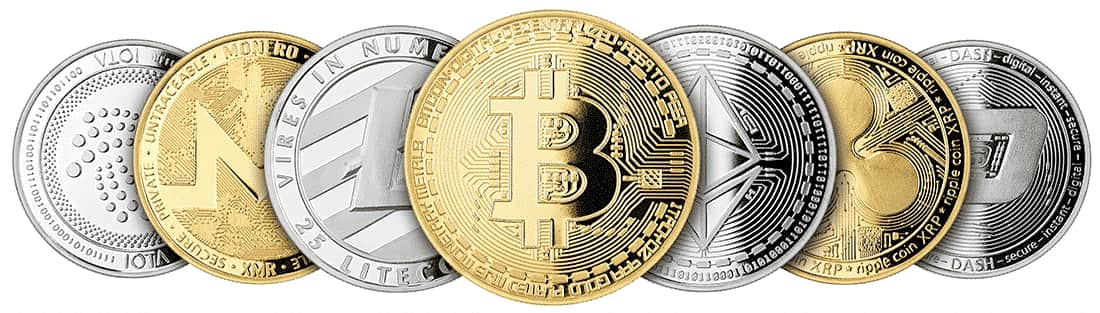
Each cryptocurrency works differently in speed, fees and price stability. Here is a neutral overview of the main coins and how they behave, whatever they are used for.
Bitcoin (BTC): limits and congestion considerations
Bitcoin is the oldest and most widely held cryptocurrency. Blocks are produced roughly every ten minutes, so on-chain transfers take a while to confirm.
When the network is congested, fees rise and confirmations slow down. The Lightning Network, a second layer on top of Bitcoin, can settle small payments in seconds where both sides support it.
Ethereum (ETH): Web3 convenience vs gas fees
Ethereum is the second-largest cryptocurrency by market value and the main network for smart contracts, the programs behind decentralised apps (dApps). Since moving to proof of stake in September 2022, it produces a new block roughly every 12 seconds. Every transaction pays a gas fee, which rises when the network is busy. Layer-2 networks such as Arbitrum, Optimism and Base process transactions away from the main chain and usually cost far less.
Good to know: gas costs can be high on busy days. Because the fee does not depend on the amount sent, it takes up a larger share of small transfers. Current gas estimates and network fees are shown on public blockchain explorers.
Litecoin (LTC): low fees and fast confirmations
Litecoin has low fees and quick confirmations compared with Bitcoin. Launched in 2011 by former Google engineer Charlie Lee, it was designed as a lighter version of Bitcoin. A new block is produced roughly every 2.5 minutes, against about ten minutes for Bitcoin, so transfers usually confirm sooner. Network fees are typically a fraction of a cent because blocks are rarely full. Like Bitcoin, its price is volatile, so the ringgit value of a balance can change quickly.
Tether (USDT): a dollar-pegged stablecoin
USDT is designed to track the US dollar, so its value moves less than other coins. However, its value in Malaysian ringgit can still change with the USD/MYR exchange rate. USDT is issued by Tether, which says each token is backed by reserves such as cash and US Treasury bills. It runs on several blockchains, including Ethereum (ERC-20) and Tron (TRC-20), and the fee depends on the network used rather than the token. Stablecoins can briefly trade below their peg during market stress, so stable does not mean risk-free.
Practical checklist: confirmations, fees, and address verification
- Check which network (e.g., ERC-20 vs TRC-20) the receiving address uses before sending.
- Verify address characters (first and last 4) and keep the TXID after sending.
- Check expected confirmations and estimated network fees for the chosen coin.
- Blockchain transfers are final, so a wrong address or network usually cannot be corrected.
| Coin | Speed | Key feature |
| BTC / Lightning | Slow on-chain / seconds via Lightning | Most widely held, fees rise with congestion |
| ETH | Fast; cost varies with gas | Smart contracts and tokens |
| LTC | Quick confirmations, low fees | Lighter version of Bitcoin |
| USDT | As fast as the chosen chain (TRON/ETH) | Tracks the US dollar |
None of these coins is legal tender in Malaysia, and no crypto gambling product is licensed there.
Game Selection Guide: Slots, Live Dealer, and Provably Fair Games
A smart game library fits how you play, not just how many titles a site lists. Game libraries differ widely between sites. Crypto casino lobbies usually group slots by provider, RTP and volatility, and many add provably fair originals; none of these sites holds a Malaysian license.

Live dealer games are streamed in real time from studios, with a human host running each table. Players place bets on screen while the dealer handles the cards, wheel or dice on camera.
Table game sections usually include blackjack, roulette, baccarat and casino poker, in both digital (RNG) and live dealer versions.
Casino poker variants such as Casino Hold’em, Caribbean Stud and Three Card Poker are played against the house rather than other players, with fixed payouts per hand.
Slots and RTP
Slots vary by return to player (RTP) and volatility. RTP describes the theoretical return over a large number of spins, while volatility indicates how frequently and how much a game may pay. Neither guarantees a particular result in an individual session.
Large providers such as Pragmatic Play appear in many lobbies, and some games are released in several RTP versions, so the same title can pay back differently from one site to another.
Live tables and shows
Live dealer games are produced in studios by providers such as Evolution, Pragmatic Play Live and SA Gaming, and streamed to online casinos.
Some crypto casinos also run sportsbooks with live betting. Online sports betting is not licensed in Malaysia either; our guide to betting sites malaysia explains the position.
Live tables have set bet ranges and limited seats for games such as blackjack and baccarat.
Provably fair and originals
Provably fair titles (Dice, Plinko, Mines) let you verify outcomes using server and client seeds and hashes. That transparency is useful if you value repeatable audits.
Before play starts, the site publishes a hash of its server seed, which commits it to that seed without revealing it. The server seed is then combined with the player’s client seed and a counter called a nonce to produce each result. Once the server seed is revealed, anyone can recompute the outcome and confirm it matches. Verification does not change the house edge or the odds of winning; it only shows that a result was not altered after the bet was placed.
Crash and fast-paced games
Crash games such as Aviator have rounds that last seconds: a multiplier rises until it “crashes”, and players must cash out before that point. The pace means many rounds are played in a short time, so limits on time and spend matter more than in slower games.
The crash point is set randomly before each round starts, and in provably fair versions it can be checked afterwards. Many crash games offer an auto cash-out, which closes the bet at a multiplier chosen in advance, but it does not change the odds: higher targets are reached less often, and the house edge applies to every round. Aviator, for example, has a published RTP of 97%. Other quick formats, such as Limbo, Plinko and Mines, follow the same pattern of short rounds with a fixed house edge.
Poker: rake and formats
Online poker rooms take a rake, a small fee from each pot or tournament entry. Rake and tournament fees affect results as much as table skill. Online poker rooms are not licensed in Malaysia.
In short: slots are about RTP and volatility, live games about stream and table limits, and provably fair games about verifiable results. In Malaysia, none of these is available from a licensed online operator.
| Format | What it is | Where it is lawful in Malaysia |
| Slots | Reel games with set RTP and volatility | Licensed casino at Resorts World Genting |
| Live dealer | Real croupier streamed online | Not licensed online |
| Provably fair | Results verifiable with seeds and hashes | Not licensed online |
| Crash / Poker | Fast multiplier games / player-vs-player cards | Not licensed online |
“A game’s fairness and a site’s license are two separate questions.”
Mobile Crypto Casinos in Malaysia: Browser Play, Speed, and Security
Mobile is how most people in Malaysia use the internet, and online casinos are built mobile-first. The legal position is the same on every device: no online casino, mobile or desktop, holds a Malaysian license.
Why browser-based sites are common
Many online casinos run as responsive websites rather than store apps, because app stores set their own rules for real-money gambling apps and restrict them by country.
Mobile speed and bankroll control
Quick rounds and instant access can raise spending without you noticing.
Set budgets, use session timers, and take regular breaks so speed doesn’t erode discipline.
Mobile security basics for any crypto wallet
- Enable 2FA and biometric unlock where available.
- Don’t save passwords on shared devices; use a trusted password manager instead.
- Auto-lock your phone and avoid public Wi-Fi for any financial transaction.
Wallet hygiene
Use official wallet apps or browser extensions. Watch out for phishing links and never store recovery phrases on internet-connected devices. Keep backups offline.
Support and responsible play
Mobile convenience works best when paired with limits and mindful session planning.
Responsible Gambling and Security Controls You Should Use
Staying in control comes down to setting a clear budget and using the tools that help you stick to it. The sections below cover setting limits in MYR terms and the player controls worth looking for, from limits to self-exclusion.
Set limits in MYR terms to manage price swings
Crypto prices can shift quickly, which affects what a small deposit is worth. Decide your budget in ringgit rather than in tokens before you convert. Work out the figures right when you transfer, so you know precisely how much crypto you are permitting yourself.
Player tools to look for: deposit limits, cool-offs, and self-exclusion
- Deposit limits and loss limits to cap daily or weekly spend.
- Time-outs / cool-offs for short breaks when you feel pressured.
- Self-exclusion for longer blocks if you need to stop entirely.
- Session reminders and automatic logout to curb fast rounds and impulsive play.
Mind bonuses and security. Big offers can push spending past a budget. Use strong passwords, enable 2FA and approve wallet connections carefully.
“If you find yourself chasing losses, pause and take a break: speed should never override clear thinking.”
Where to get help: Malaysia has no dedicated national gambling helpline. Gambling Therapy offers free, confidential online support, chat and forums for anyone affected by gambling, run by the Gordon Moody charity. The licensed casino at Resorts World Genting admits only visitors aged 21 and over.
Conclusion
Crypto casinos are defined by how you pay. Malaysia has no licensing route for online gambling, and paying in crypto leaves that unchanged: no crypto casino holds a Malaysian license.
The licensed gambling products in Malaysia are land-based: the casino at Resorts World Genting, numbers forecast games from Sports Toto, Magnum and Da Ma Cai, and totalisator betting on horse racing. Crypto itself is legal to trade through exchanges registered with the Securities Commission, but it is not legal tender.
The Government is studying tougher rules on online gambling, and we will update this guide if the law changes. If gambling is causing problems for you or someone close to you, Gambling Therapy offers free support.
FAQ
What is the difference between a bitcoin casino site and a traditional online gambling site?
How do instant withdrawals actually work, and are they guaranteed?
Is cryptocurrency legal in Malaysia?
How does provably fair verification protect you?
Which cryptocurrencies are most common?
References
- Laws of Malaysia (Attorney General’s Chambers): Common Gaming Houses Act 1953, Betting Act 1953, Pool Betting Act 1967
- Bank Negara Malaysia and Securities Commission Malaysia, joint statement on the regulation of digital assets in Malaysia, 6 December 2018
- Capital Markets and Services (Prescription of Securities) (Digital Currency and Digital Token) Order 2019, in force 15 January 2019
- Ministry of Finance Malaysia (gambling licensing authority)
- New Straits Times, January 2026, and AGBrief, February 2026: Government plans for stricter online gambling laws
- Gambling Therapy (support service)
 Disclaimer
18+ Please Gamble Responsibly – Online gambling laws vary by country – always ensure you’re following local regulations and are of legal gambling age. Gambling can be addictive; please play responsibly and seek help if needed. Some of the links featured on the GamesHub site are affiliate links. This means we may earn a commission – at no additional cost to you – if you click a link and make a deposit at a partner site. All of our reviews and recommendations are subject to a rigorous editorial process to ensure they remain accurate, impartial, and trustworthy. You can learn more about how we evaluate platforms on our How We Rate page. For full transparency about our partnerships, please visit our Affiliate Disclosure. If you have any questions or feedback, don’t hesitate to contact our team.

Categories


Trending News

- Zelda Ocarina of Time Remake Switch 2 Limited Edition Console Leaked — Here’s What We Know
- Street Fighter 6 World Tour Guide – Best Gifts for Each Character
- Apex Legends’ Godzilla event brings a live kaiju to Storm Point
- GTA+ explained: price, benefits, platforms, and is it worth it?
- Bungie sets February 2027 start for Destiny 2 content unvaulting, new timeline confirmed

Trusted by Players Everywhere

#1 Video & Casino Gaming Portal
GamesHub.com is an expert guide to the wide world of video and casino gaming, owned and operated by Gameshub FZ-LLC. Like our readers, we love games and the gaming culture. Our team of passionate gamers, gamblers and seasoned industry experts established this site as a resource.

500K
Monthly Readers

1.4M
Followers on X

35K
Articles

Trusted
For 20 years