Linux has crossed the 5% market share threshold on Steam, marking the most significant milestone the platform has reached in PC gaming history. It is a number that would have seemed implausible just a few years ago — and it carries real implications for developers, players, and the future of platform diversity on PC.
The figure comes from Valve’s Steam Hardware & Software Survey, which tracks the operating systems and hardware configurations of active Steam users. According to data reported by Phoronix, Linux’s share on Steam has now surpassed 5%, a threshold that cements the platform’s place as a genuine — if still minority — force in PC gaming.
How Linux Reached 5% on Steam: The Numbers Behind the Milestone
To put that figure in perspective, Linux’s growth on Steam has been anything but linear. The platform spent years hovering well below 2%, and as recently as mid-2025 sat at just 2.57% among Steam users according to the June 2025 Hardware Survey. The acceleration since then has been sharp.
A few data points illustrate how quickly the trajectory has changed:
- June 2025 — Linux at 2.57% on Steam; Arch Linux (the basis for SteamOS) leading distributions at 0.27%
- October 2025 — Linux jumped to 3.05%, a gain of +0.41% in a single month, while Windows dropped to 94.84% (-0.75%)
- Current — Linux has now surpassed 5% on Steam, crossing a threshold that once seemed distant
For broader context, Linux desktop share globally also hit 5% by June 2025 according to StatCounter Global Stats — though some analysts note that a portion of that growth reflects declining overall desktop usage rather than a pure surge in Linux adoption. On Steam specifically, the numbers reflect active gaming sessions, making the milestone harder to dismiss.
How the Steam Deck Changed Linux Gaming Adoption
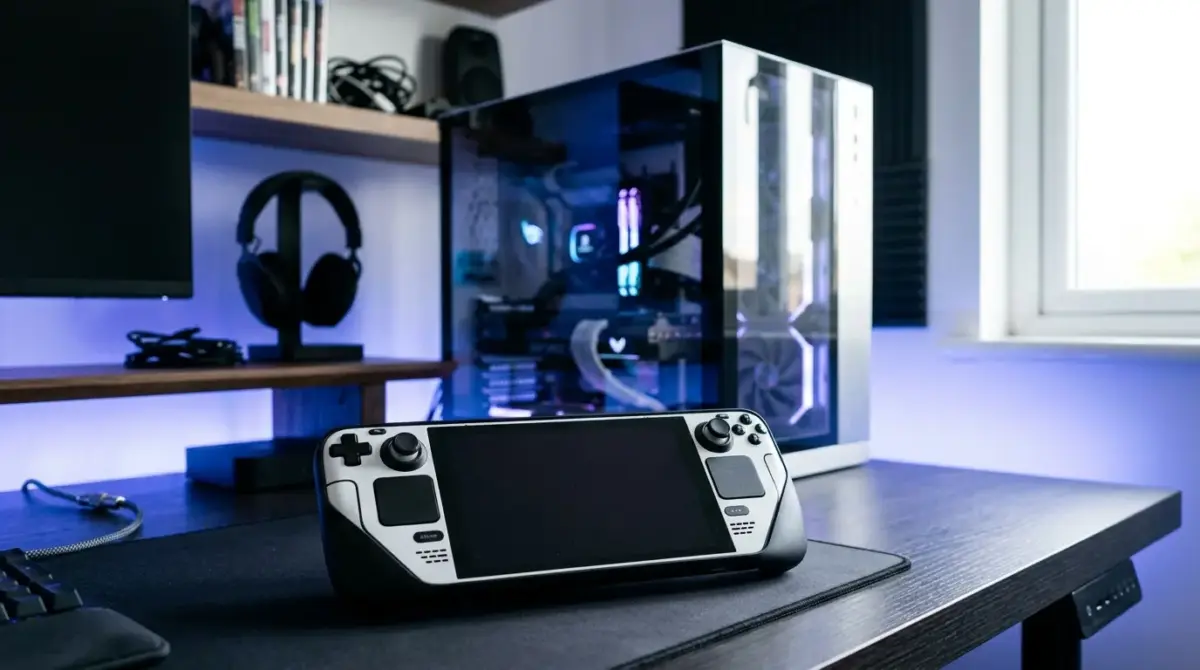
The Steam Deck is the single biggest reason this milestone exists. Valve’s handheld — which runs SteamOS, a Linux-based operating system — has placed Linux in the hands of millions of players who have never thought about operating systems in their lives. That normalisation effect is exactly what years of Steam Machine experiments failed to achieve after Valve’s first attempt at Linux-powered gaming hardware in 2015.
Critically, Steam Deck users are counted as Linux users in Valve’s hardware survey whether they realise it or not. Every unit sold quietly adds to Linux’s share figures, which means the 5% milestone is partly a measure of Steam Deck’s install base growth rather than a mass migration of desktop users away from Windows.
Valve has backed this growth with serious infrastructure investment — Proton, its compatibility layer that allows Windows games to run on Linux, has matured considerably since launch, with thousands of titles now rated as Steam Deck Verified or Playable. That technical foundation is what makes the hardware gains sustainable rather than superficial.
What 5% Linux Market Share Means for PC Game Developers
For developers, 5% is a number worth paying attention to. Historically, platform share in that range is where serious optimisation conversations begin — it represents a large enough audience that ignoring it carries commercial cost. The Deck Verified program gives Valve a direct lever to encourage compatibility work, and 5% share gives that program considerably more weight.
The broader PC ecosystem context matters here too. With Sony continuing to expand its PC strategy and major titles routinely releasing on Steam day-and-date, the platform’s health directly affects how publishers think about platform priorities. A Linux share figure at 5% is no longer a rounding error — it is a real segment of the Steam audience that anti-cheat incompatibility and poor port quality actively alienate.
Community analysis suggests the real Linux share could sit even higher, with some estimates ranging between 3–10% when accounting for devices categorised as “Unknown” in survey data. If accurate, the visible 5% figure may be understating actual Linux usage on Steam.
Can Linux Keep Growing on Steam Through 2026 and Beyond?
The path to further growth is reasonably clear: continued Steam Deck sales, ongoing Proton improvements, and the lingering tailwind of Windows 10’s end-of-support pushing some users toward alternatives. Rumours of a Steam Frame — a potential SteamOS-powered VR device from Valve — could add another hardware vector for Linux adoption if the product materialises.
The ceiling, however, is real. Anti-cheat compatibility remains a significant blocker for competitive multiplayer titles, and Windows dominance is not softening quickly enough to suggest Linux will approach double digits on Steam in the near term. Five percent is a milestone, not a tipping point — but it is a foundation that did not exist three years ago. GamesHub will continue following Linux’s share figures as Valve releases future hardware survey data.
